

World-class researchers and cutting-edge research provided the world with a window into the incredible work taking place.
A week at the center of the sorghum universe provided exactly the spotlight Texas Tech University hoped for to highlight the role, impact and significance of the research happening across campus and beyond.
“I think people now know Texas Tech has a strong commitment to the sorghum industry with excellent individual researchers working on sorghum advancements,” said Monty Christian, executive director of marketing and strategies for Research & Innovation.
“But what they may not have realized was the breadth of what we have here. Our work across the university touches everything from breeding and genetics to water, agronomy, animal nutrition, human health, food and commercialization.”
For the first time, the Global Sorghum Conference was held in the United States with Research & Innovation as well as Texas Tech’s Davis College of Agricultural Sciences & Natural Resources serving as hosts. The event brought together hundreds of thought leaders and researchers to discuss and assess the future of the key crop.
“I think the conference was a wonderful success,” said James Reecy, vice president for Research & Innovation. “Folks from around the world were very appreciative of the opportunity, and they were very active within and outside of the sessions, which was great to see.”
Following three years of planning, the conference took place Sept. 14-18 at the Lubbock Memorial Civic Center. Almost 400 people attended from 20 countries around the world. In addition to interactive workshops for attendees, approximately 150 researchers presented their work while dozens of presentations and panels took place, offering insights into the future of one of the world’s most strategic crops.
“The message Texas Tech sent to the global sorghum community was clear: we are not just contributing to the future of agricultural research; we are helping shape it,” said Monica Hightower, lead grant writer in Davis College and a member of the conference host committee. “Hosting the first Global Sorghum Conference in the United States gave us an extraordinary opportunity to showcase our research expertise, strengthen international partnerships and demonstrate how the work taking place in West Texas can help address some of the world's most pressing agricultural challenges.”
The conference also gave Texas Tech the chance to showcase the work of its top researchers in sorghum and send a signal that the university is positioned to play a key part in finding solutions to pressing problems such as feeding the world’s growing population.
For example, Luis Herrera-Estrella, President’s Distinguished Professor of Plant Genomics and director of the Institute of Genomics for Crop Abiotic Stress Tolerance (IGCAST), focusing on how plants adapt to environmental extremes such as heat, cold and drought.
Likewise, Krishna Jagadish, professor and Thornton Distinguished Chair in the Department of Plant & Soil Science and director of the Texas Coalition for Sustainable Integrated Systems Research Program, also leads important research initiatives aimed at enhancing environmental sustainability in the region.
Other key sorghum researchers include Haydee Laza, associate professor of plant physiology, and Gunvant Patil, associate professor in molecular crop improvement in the Department of Plant & Soil Sciences.
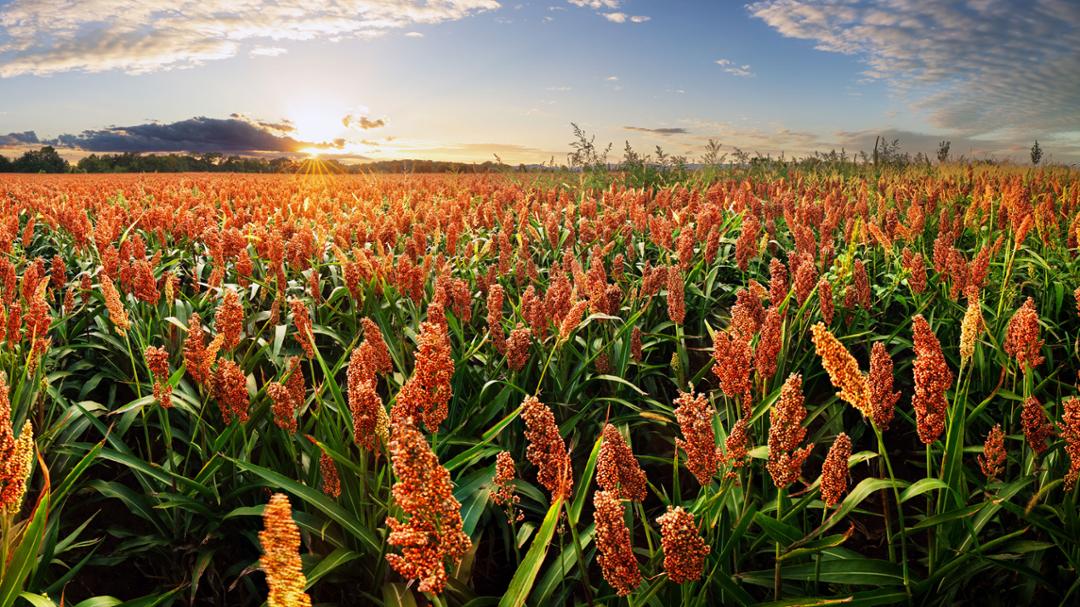
While the region is known as the world’s largest cotton patch, sorghum has long been heralded for its resiliency and as a rotational crop for producers. It is well-known throughout the country and grows well on the High Plains of Texas. Sorghum, a water-conserving crop, has become the fifth-largest cereal crop in the world.

“I think we were able to demonstrate that Texas Tech can be an important international partner and a place where the sorghum community comes together,” Christian said. “The major challenges facing agriculture – water, drought, heat, food security and sustainable production – cross disciplines and national borders.
“Texas Tech is in a unique position because we have the research expertise, but we’re also surrounded by the agricultural production systems where many of these challenges are playing out in real time.”
The conference also served to strengthen Texas Tech’s reputation for research excellence – now and in the years to come.
“The future for sorghum research at Texas Tech is very bright,” Reecy said. “We have an incredible team of faculty, staff, post-docs and students. They have been blazing new paths for the future. Furthermore, we are looking to grow our research team to make an even greater impact here in West Texas and beyond.
“The Global Sorghum Conference highlights the outside-in nature of who we are and how we can rise to meet the needs of our stakeholders. We lead by listening first and then working toward solutions that will positively impact society.”
Christian said the conference might have ended, but the opportunities for Texas Tech to work with other institutions and researchers are, in some ways, only beginning.
“The most important part of this conference may actually be what happens next,” he said. “If conversations that started here become research collaborations, funded projects, student opportunities or new partnerships, that’s the real legacy of the conference. We spent three years preparing to bring the global sorghum community to Lubbock.
“Now that they’ve been here, I don’t see the conference as an ending. I see it as an introduction. It paves the way to more opportunities, and From Here, It’s Possible™.”