


Aiday Sikhova, in her initial faculty position, has earned the Department of Economics' first National Science Foundation-funded projects.
For some, change is to be feared. For Aiday Sikhova, it’s something she embraces.
Growing up in early 1990s Kazakhstan, in the years after the country gained independence from the Soviet Union, Sikhova watched as Kazakhstan rapidly sought to catch up to the rest of the world.
Her parents, who had been longtime professors of mathematics, shifted to work measuring risk in the actuarial science sector of the insurance field. As Sikhova reached college age, her desire for a world-class education took her across multiple continents to the U.S.
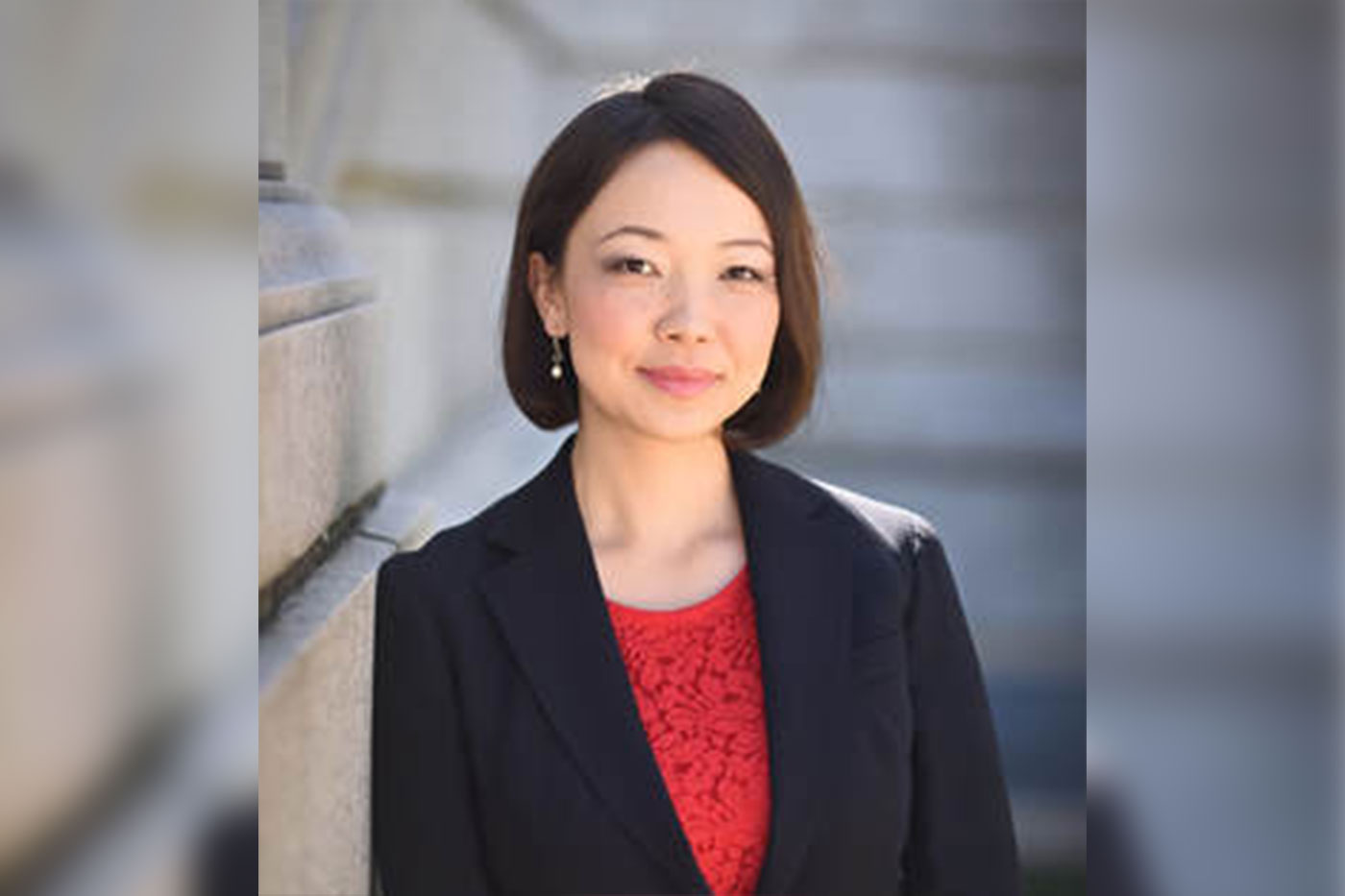
Sikhova has traversed this country on the way to earning bachelor’s and doctoral degrees, in addition to conducting postdoctoral research. And since Sept. 1, she’s taught Principles of Microeconomics as an assistant professor in Texas Tech University’s Department of Economics.
This reality is more than a dream come true for Sikhova. It’s beyond anything she could’ve visualized.
“I told my mom that if somebody would have told me 20 years ago that I could be a professor at an amazing school like Texas Tech, I would have been like, ‘Go away,’” she laughs. “‘This is not possible.’”
With her parents’ background and two sisters who followed in their footsteps, pursuing mathematics in college looked to be set in stone for Sikhova. But reasons for pause included the Kazakhstani postsecondary system’s restriction on changing majors after applying for scholarships and declaring.
The opportunity to explore other fields in the U.S. drew Sikhova to Vanderbilt University.
Her parents’ transition to actuarial science provided an example of mathematics’ numerous applications, encouraging Sikhova to take varying courses.
Her eyes were opened to economics’ math-based nature and relevance to real life situations.
“I could see the applications right away, and then it clicked,” she says. “I was like, ‘I really want to do this.’”
Sikhova pursued a double major in economics and math as an undergraduate. Midway through her third year, the time was approaching to select what direction she’d choose for her doctorate, a next step that was never in question.
The influence of her parents and two sisters weighed heavily on Sikhova, but she decided to seek a future in economics.
Her parents weren’t thrilled by the news. Economics was more of a social science than anything they were used to.
Though, they would soon be swayed by Sikhova’s passion for the subject, in part solidified by a summer research experience with Eric Bond, professor of international trade, after her third year. They were also reminded of the difficulties of research regardless of the topic and saw the wonder with which Sikhova approached asking unanswered questions.
In the latter stages of completing her doctorate at the University of Wisconsin-Madison, under Professor Ananth Seshadri, Sikhova began working on a paper about intergenerational mobility, one that reflected, in many ways, her own story.
Curious about the notion that college-educated parents tend to have college-educated children, she sought an explanation that went beyond such parents earning more money and spending those resources on their children.
Using administrative data on the subject from Sweden, Sikhova found that in these cases, aspects of the parents including the value they place on education matter more than financial resources.
The conclusion added up with experiences from her childhood, in which her parents strived to place Sikhova in a better school with better peers who pushed her to improve through competition. Though her professor parents never studied with her, they guided Sikhova and her siblings with an invisible hand.
Sikhova’s project on intergenerational mobility was published in the “Journal of Labor Economics,” widely recognized as the top journal in the field, affirming the project’s long-lasting significance for her.
The inspiration for the next phase of Sikhova’s career path, which included finding the niches of economics of education and labor economics, originated during her time at Vanderbilt.
There, she simultaneously realized the value of education and watched her peers turn down more lucrative career earnings in science, technology, engineering and mathematics (STEM) fields in favor of other majors.
Considering these students were talented and had the potential to go far in STEM, at least from Sikhova’s perspective, their decisions were baffling.
“That part of it was very surprising to me,” she recalls. “I was like, ‘You’re really good at it. You can become an engineer and earn a lot more compared to some other majors, but you’re choosing not to.’ Why would that be?”
Sikhova had her theories. Maybe some didn’t have enough information about the potential outcomes associated with STEM and non-STEM paths. Others probably didn’t want to risk taking on the rigors and cost of several pre-requisite courses, just to be rejected from the engineering program.
But she wanted to explore this question more, and this thought lingered all the way up to her time conducting postdoctoral research at Ohio State University.
Sikhova voiced her interest in this aversion to STEM-related student debt to her mentor, professor Bruce Weinberg.
After connecting with another Ohio State professor, Meta Brown—who had student debt data to complement the transcript-level administrative and major-application data Sikhova and Weinberg had compiled—the team decided to investigate what drove students’ choices of major.
Her research team applied three times for NSF funding, steadily improving the project with revisions before finally receiving the grant in August 2025.
This milestone for a concept Sikhova cared about deeply came roughly a month after she earned another NSF grant for a collaborative project among researchers from Ohio State, Miami University in Oxford, Ohio, and herself.
It also occurred around the same time she joined Texas Tech, as Sikhova had come to Lubbock with her husband, Zhen Ye, who had joined the Area of Finance in the Jerry S. Rawls College of Business.
Rashid Al-Hmoud, economics chair, had been most excited about Sikhova’s research capability when offering her a position.
When he was notified of her NSF grants, he was ecstatic, as the occasion signified the first time a department faculty member was awarded federal funding through the NSF.
“Two NSF grants in the span of two months,” Al-Hmoud says. “I can’t emphasize how important that is for us as a department, as the College of Arts & Sciences and also as a university.”
Sikhova’s latter endeavor covers the thought process of using real-life examples to teach students to increase participation in economics or, feasibly, other majors.
She was motivated by her experience teaching economics while at UW Madison, where she earned two campus-wide awards for her work teaching introductory and advanced courses. Sikhova’s efforts to apply concepts to relatable instances were a major part of her success.
Take shampoo and conditioner in the beauty aisle, for instance. It’s a concept people don’t often give a second thought, but they’re right next to each other, and sometimes sold together as a bundle of complementary products.
“Maybe you lower the price of both, but that way your revenue might still be higher because you’re selling two products instead of just a shampoo or a conditioner,” Sikhova explains. “When you use these kinds of real-life examples, I think that for students, it’s easier to understand what complements mean.”
These kinds of digestible lessons in introductory courses, which Al-Hmoud teaches at Texas Tech, are a crucial part of the stage in which people develop their love-hate relationship with the field, Al-Hmoud says.
Reflecting on both accomplishments, Sikhova says it still feels surreal to think about. What holds more weight with her is the guidance and support she’s received from her more established economics colleagues that was a crucial part of the process.
“We can come up with ideas, and then they can help us improve them, support us and share their data with us to make it possible, so that people like me who are just starting out can be part of this kind of large programs by such reputable organizations like the NSF,” she adds.
Al-Hmoud isn’t just excited by the new possibilities that may occur from Texas Tech economics receiving NSF recognition through Sikhova’s awards. He also looks forward to seeing her projects’ impact on universities equipping students with the right skills for the job market.
“As you can tell, the overarching theme of her research centers on education outcomes and labor market requirements, particularly in the context of the growing influence of artificial intelligence,” Al-Hmoud says. “That is the type of research that is going to get lots of national attention once completed, because people will have an interest in learning what majors to choose if they want to improve their chances of a good job.”
Sikhova is interested in seeing how the breadth of her research impacts the department. Her unique interests, methodologies and contacts with other researchers will broaden what the department can showcase at conferences and the kind of doctoral students it can attract.
Having also worked in asset management and economic litigation, Sikhova hopes her diverse background can help inform undergraduate students what they want to do with their major.
Lubbock has already endeared itself to her. She and her husband take walks around their neighborhood with their young child, and they receive many smiles and waves from passing drivers. Some deliberately slow down to smile at Sikhova’s baby.
For someone who came from a larger city in Columbus, Ohio, this was completely foreign.
“I’ve just never experienced that before,” Sikhova says. “I’m very glad he’s growing up in this environment.”
She doesn’t take for granted the kindness she sees on the street or within the department. Sikhova knows her achievements are the products of hard work and persistence through adversity, values she believes will resonate with her students.
And within that message is the reality that they’ll occasionally stumble. What really matters, though, is what lies on the other side.
“You have to keep going,” Sikhova says, “because sometimes, the things that you think are failures are actually stepping stones to a bigger success you didn’t consider was possible.”