
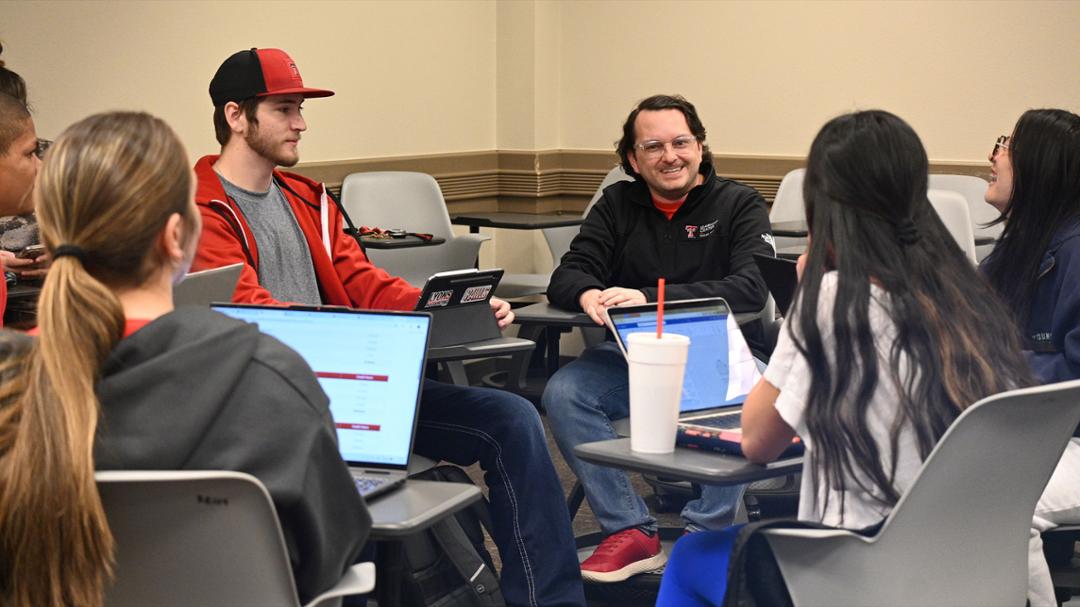

The student-focused learning initiative is now one of only nine programs in the state to attain the distinction.
For thousands of Texas Tech University students, the Learning Center and its supplemental instruction (SI) program have been the difference between success and distress.
Both remain among some of the true hidden gems on campus with numerous students taking advantage of the resources and others unaware of their existence and intent.
That perception should be about to change following years of hard work that resulted in Texas Tech’s SI program being officially accredited by the International Center for Supplemental Instruction. The recognition became official in January, making Texas Tech one of only nine Texas institutions with the designation.
“Our goal is to provide the best learning experience for our students,” said Will Lopez, who oversees the SI program. “The accreditation means a lot for all of us, our students and the good work they do. It validated what we do, and it means what we do matters.”
The Learning Center provides students with resources to help them become academically successful. In addition to SI, the center provides peer-to-peer tutoring, another program focused on enhancing student achievement.
For an idea of the programs’ significant impact, there were more than 32,000 student visits (more than 6,300 unique student visits) to SI sessions in the fall 2025 semester. Meanwhile, peer tutoring saw 6,275 student visits, meaning the center had some 38,660 total student visits.
“This accreditation affirms what we have long known – that our Supplemental Instruction is helping to transform student success at Texas Tech,” said Ron Hendrick, provost and senior vice president for academic affairs. “When collaboration replaces isolation and support is built into the academic experience, achievement follows. This distinction reflects both the excellence of our Learning Center team and our commitment to ensuring that all students have the tools to thrive.”
The secret sauce of success is in SI’s approach, building student-centric interactive learning groups through SI sessions held regularly throughout each semester. Review sessions for some of the most historically challenging courses on campus (such as accounting, biology and organic chemistry as well as others) are led by an undergraduate student who previously earned an A in the course.
These student leaders, who often also have benefited from SI, are trained on learning strategies and emphasize collaborative learning techniques that encourage student interaction.
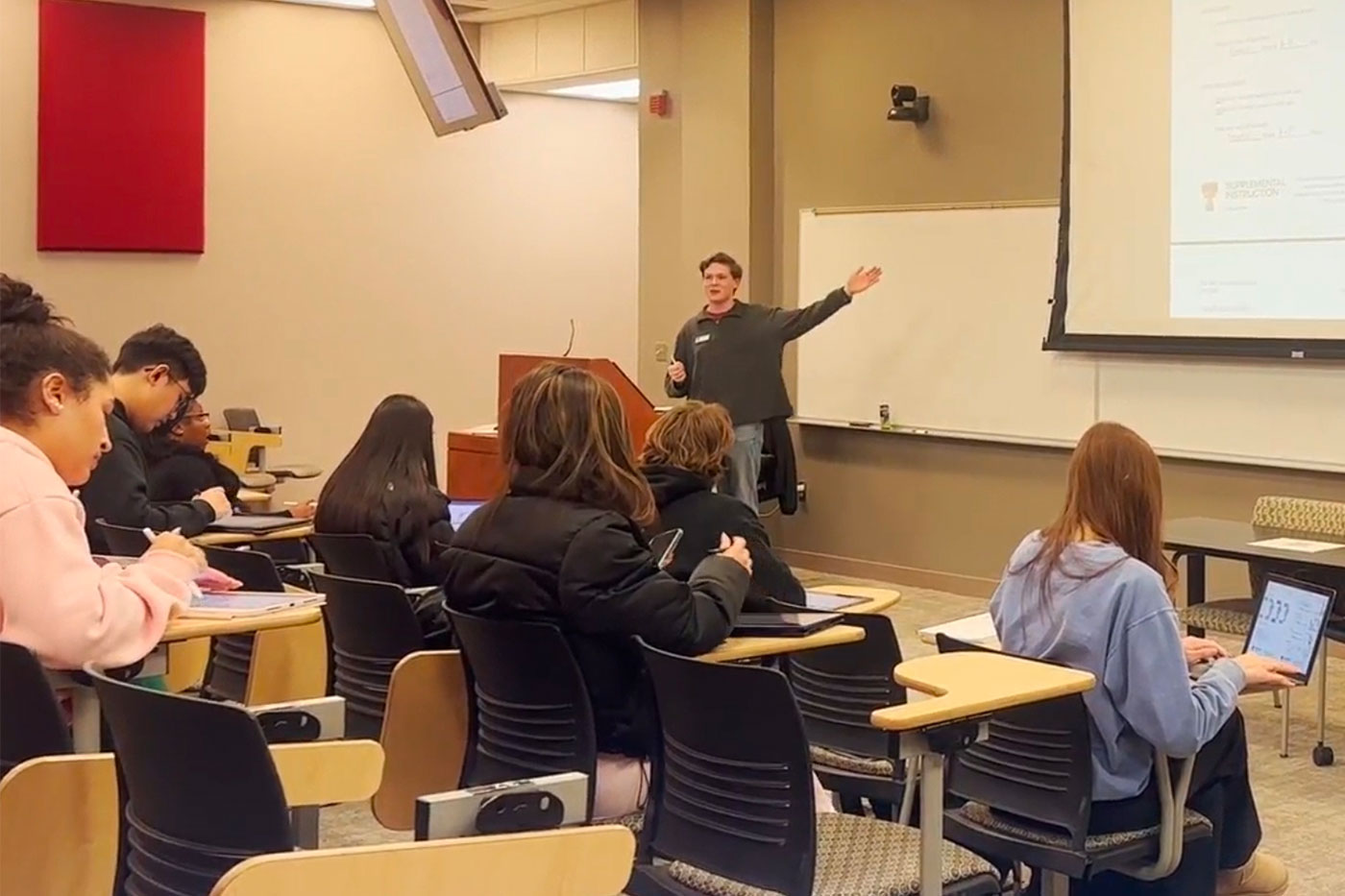
That is how Hayden Ratermann, a first-year biology major on a pre-med track from Frisco, found his way first to participating in SI sessions and later to leading them. Among his first-semester classes was Anatomy & Physiology I.
“I heard a lot about the class and how hard it was,” he remembered. “I felt like I was probably going to be lucky just to pass the class, so I made sure to go to the SI sessions two to four times a week with two different leaders.”
Hayden was amazed how well student leaders could summarize lectures and provide thorough reviews and comprehensive prep materials for tests. It turned out to be time well spent as Hayden earned an A.
From his perspective, SI provided multiple advantages. It gave Hayden an on ramp to a learning community of approximately 20 other students. The group was led by a student roughly the same age, and the in-depth sessions were another available option as well as one-on-one time during office hours with an instructor in a class of several hundred.
“After the first couple of meetings, the same people kept showing up, and we formed connections and study groups outside the sessions,” Hayden said. “It was just really helpful, especially being able to ask questions in that smaller setting.”
The experience was so fulfilling for Hayden that he quickly took on the role of supplemental instruction session leader for Anatomy & Physiology I.
“It just helped me so much through a hard class,” he said, “I thought a great way to give back to Texas Tech would be helping other students be successful in the course.”
Stories like Hayden’s are a frequent outcome in SI as students are eager to advocate for its impact, taking on leadership positions to assist others through a learning journey with which they are already familiar.
All of this effort and student testimonials helped pave the pathway to accreditation, which strengthens the program’s bona fides, and it took a concentrated commitment to make it happen.
Will, who has overseen the Supplemental Instruction program for more than eight years, explained the process began during training at the International Center for Supplemental Instruction almost four years ago. It was there that the roadmap to accreditation was outlined.
“At that time, I talked to our professional staff and said, ‘Why can’t that be us?’” he asked. “We have good students here. We have faculty support. So, over about a three-year period, we changed things to ensure we were meeting their standards.”
Changes involved how students were trained, materials were created and sessions were offered. The approach became more systematic with an emphasis on creating templates of success.
After that, it was a matter of submitting documentation, including letters of support from faculty as well as statistics on grades and student performance. Texas Tech provided examples of planning guides and other materials created by student leaders and topics covered in their training.
Will said it was especially rewarding for everyone at the Learning Center when they learned the program had been officially accredited.
“It meant a lot to us, our students and all of the good work they do,” he said. “It means our work truly matters and that we play a role in having and creating the best student experience we can at Texas Tech.”
Patrick Bohn, who oversees the Learning Center and its programs, said SI had been a consistently excellent offering, but the path to accreditation challenged the team to think more strategically and strive for new standards.
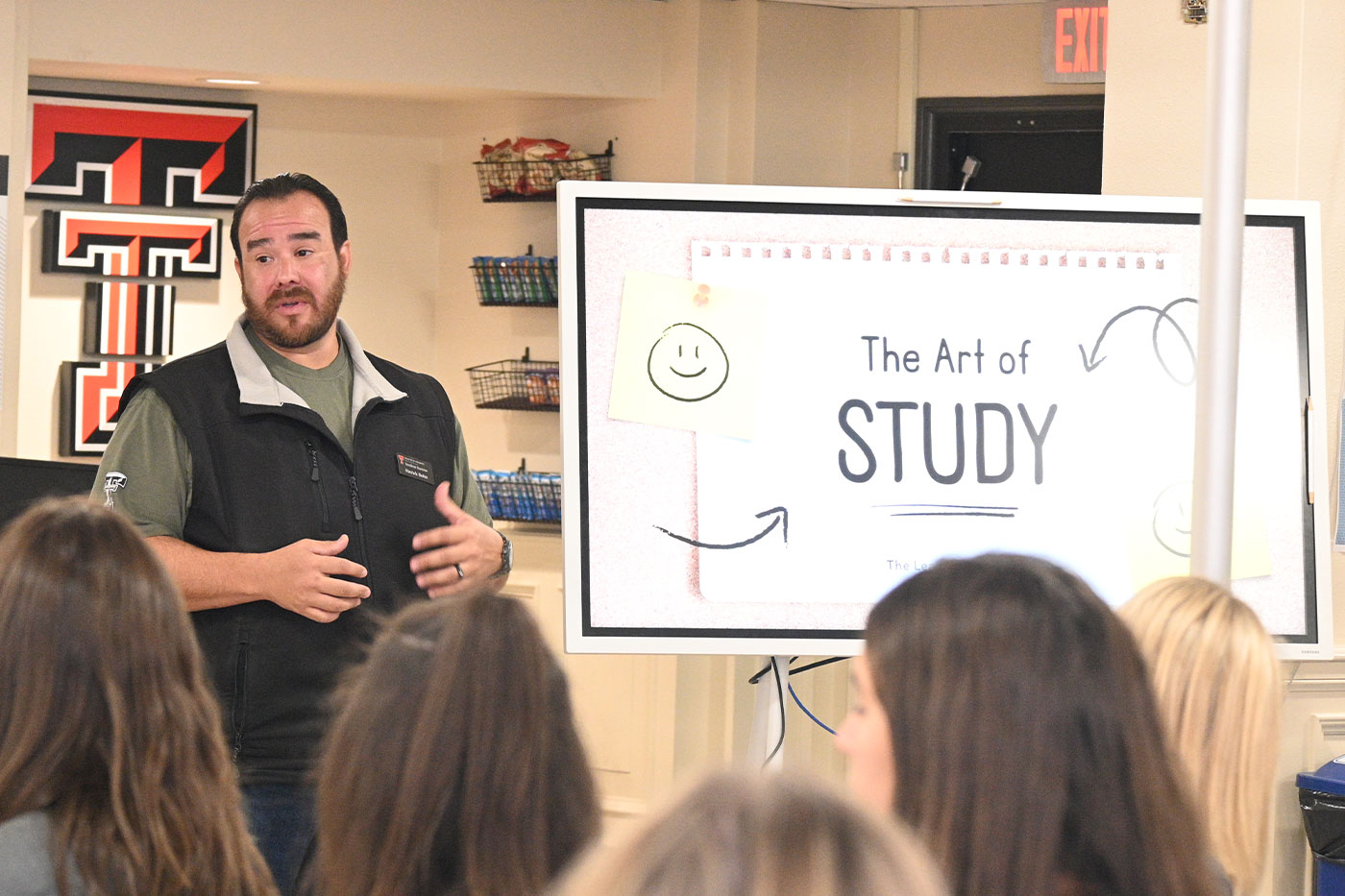
“Receiving that validation while also keeping ourselves accountable on a nationwide level communicates that we are doing things at a very high level,” he said. “I think when parents see that accreditation, it gives them peace of mind as far as how strong our program is.”
SI leaders provide review sessions through attending the class again. They create their own materials as well as develop engaging activities to enhance student learning within a group.
One important aspect of these sessions is to ensure students are talking to each other and the SI leader.
“We want to make sure we are not just lecturing,” Will said. “We expect students to also attend the class lectures, but that’s not what we expect in the SI sessions. We want them to work on problems in groups, engage with the material and meet peers so they can have study groups outside of class.”
Hayden said the first time he became aware of SI was because of a professor who encouraged students to take advantage of the program, the cost of which is covered through student fees.
He said he was nervous about the experience and didn’t know what to expect or what the impact as far as learning would be, but he was convinced of the program’s ability to deliver on its promises after the first session.
That same rapid return on time investment was true for Reagan Weaver, a third-year senior from The Woodlands majoring in agricultural education.

Reagan has been involved with SI for the past two years. Upon arriving at Texas Tech, she was a pre-vet major, and the program was instrumental in helping her change her major as she discovered her passion for teaching.
“Not only do I get to teach, but I teach one of my favorite subjects, animal science,” she said. “Through supplemental instruction, I have learned so much, grown tremendously and built incredible friendships.
“I used to struggle with receiving criticism, but now I have learned how to accept feedback gracefully and apply it to better myself and my work.”
Like a lot of Texas Tech students, Reagan already has had a number of experiences in the workforce, but the job as an SI student leader has been exceptionally rewarding.
“This role is unlike anything else I have experienced,” she said. “I have found a family in my coworkers and a professional staff who truly want us to succeed. I have also had the privilege of watching SI grow tremendously during my time here. Seeing the accreditation process – something we worked toward for so long – come to fruition fills me with pride.”
While the program now has approximately 70 student leaders, some students have even moved from learner to leader to staff.
That’s been the journey of Erika Soto, a Texas Tech graduate who is now an administrator with the program. She helps coordinate student leaders and SI sessions. She received an introduction to SI as a freshman taking an introductory chemistry course.
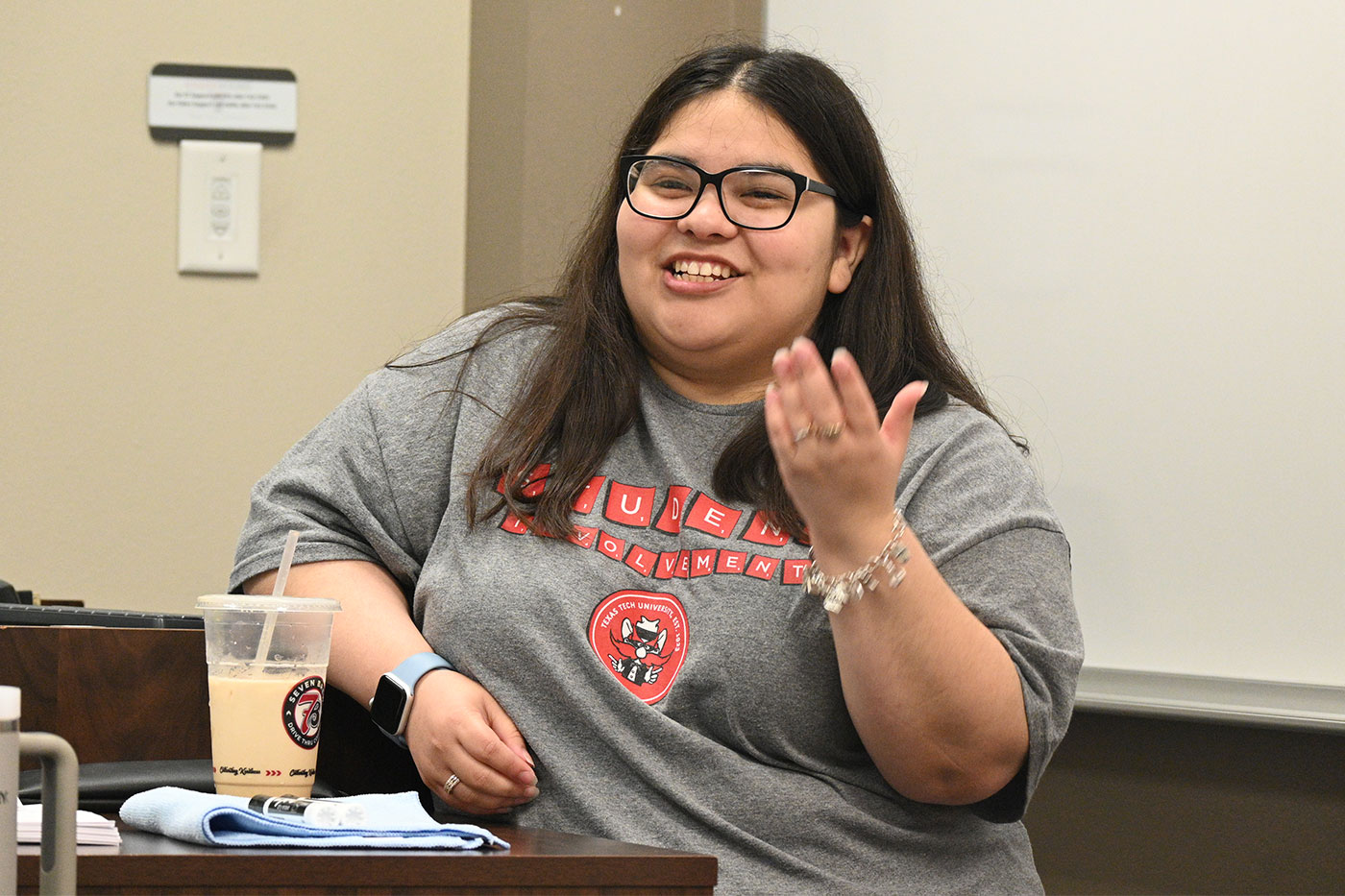
She was impressed with the amount of material and detail provided through SI. Eventually, Erika was attending multiple sessions for science classes she was taking and found them to be academic difference-makers. Her grades improved dramatically.
“I learned a lot,” she said. “I got to practice the material and answer questions. I became more comfortable around my peers asking questions in class. I was a first-generation student, so it was important for me to learn about the resources offered on campus.”
Like Hayden and Reagan, Erika thought a way to give back to fellow students was to become a Supplemental Instruction student leader, so she applied and was soon leading sessions on algebra.
She said her three years as a student leader were rewarding on multiple levels, especially in forming connections with students.
After that, she said it only made sense to accept a full-time staff position with SI shortly after she graduated in 2022 with a bachelor’s degree in psychology. In the role, she trains student leaders and coordinates social media content.
“What I found is that whether you are a student attending an SI session or you become an SI leader yourself, it is such a beneficial experience,” she said. “You build personal relationships, and you build yourself up professionally as a student through the skills you gain.”
Will said the program is successful because of the partnerships it has with professors across campus. They have watched on more than one occasion as their students prosper through attending the sessions, making them better prepared to respond to the demands of the class.
Likewise, the SI team is designed with a constant emphasis on tweaking and improving the program. In addition to students, two graduate assistants help ensure sessions are staffed and running smoothly. There are also student senior members who observe student leaders on multiple occasions and provide feedback to strengthen approaches and presentations.
“We couldn’t reach the number of students we reach without our student staff,” Will said.
The program also is supported through the Raider Success Hub (RSH), a centralized resource that connects students with staff and faculty throughout their time on campus. Since debuting some three years ago, the RSH has played a key role in Texas Tech marshaling more student support, more quickly than ever.
The RSH is the tool Learning Center programs and personnel can use to share information and communicate trends with advisors and administrators. Such information allows the university to address individual and larger needs in real time.
“We are always looking for ways to elevate the experience for students and to make it the best learning experience,” Will said.
That’s the driving mission of the Learning Center – to not only help prepare students for challenging classes, but also for the challenges of life that await.
“Ultimately, we want to provide students with a positive, safe environment so they have the ability to learn,” said Patrick, who has been at the Learning Center 13 years. “Whatever that looks like for them – an SI session with 40 or 100 people or a student coming in and working one-on-one with a peer tutor.
“That’s why we love what we do, and that’s why we’ve been here so long because we continue to push our programs to see the impact on a daily basis, and that is something that, for us, is very exciting and that we love to do.”
And, the SI program is one more place where Texas Tech students can discover a sense of belonging through sharing academic challenges.
“The student leaders care a lot about students,” Hayden said. “Not just their grades but also forming connections with them. They will do everything they can to help them understand the content and be successful.”