
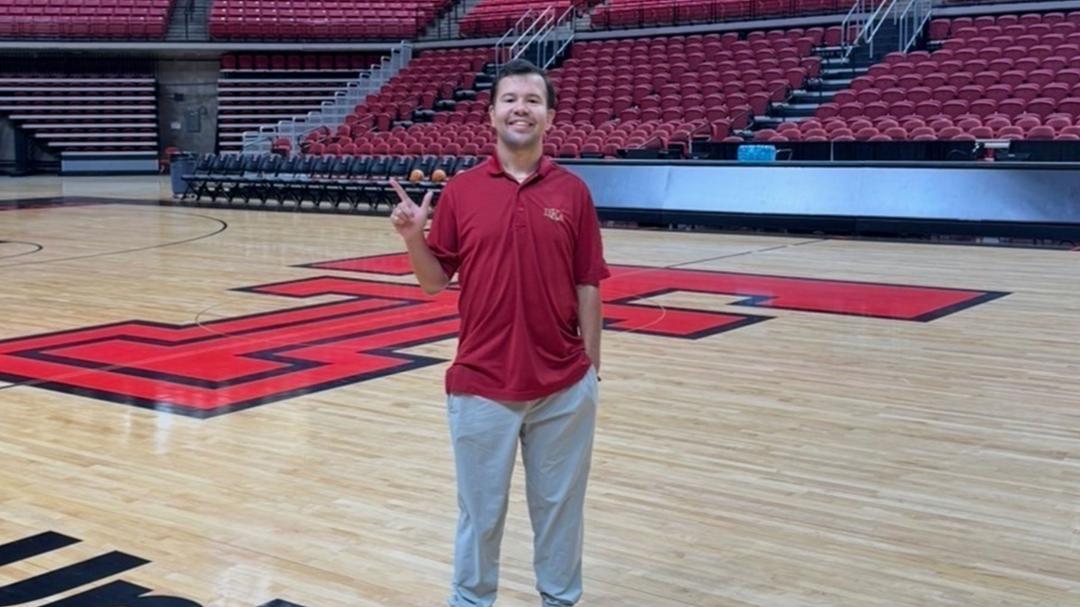

Red Raider resiliency was on full display as Texas Tech student Aaron Delgado battled Stage 4 Hodgkin’s Lymphoma, giving others hope along the way.
During scarlet falls and blossoming springs, the resounding echoes of the Victory Bells are unmistakable. Their hand-rung echoes pierce through the vibrant atmosphere, capturing another Red Raider triumph. Every clang serves as a reminder of perseverance.
For Aaron Delgado, a mechanical engineering major at Texas Tech University, the most significant bell he’d ring would be far from campus, following months of medical treatment and steadfast determination.
For many students, bells signify touchdowns and victories, but for Aaron it signified a battle that hailed strength no crowd could match.
Aaron was greatly influenced by his family and community growing up. The youngest in his family, Aaron looked up to his older brother, Aramis, a Texas Tech alumnus. Despite their different personalities, the two were driven to accomplish something significant for themselves. Consequently, Aaron’s decision to enroll in Texas Tech felt natural.
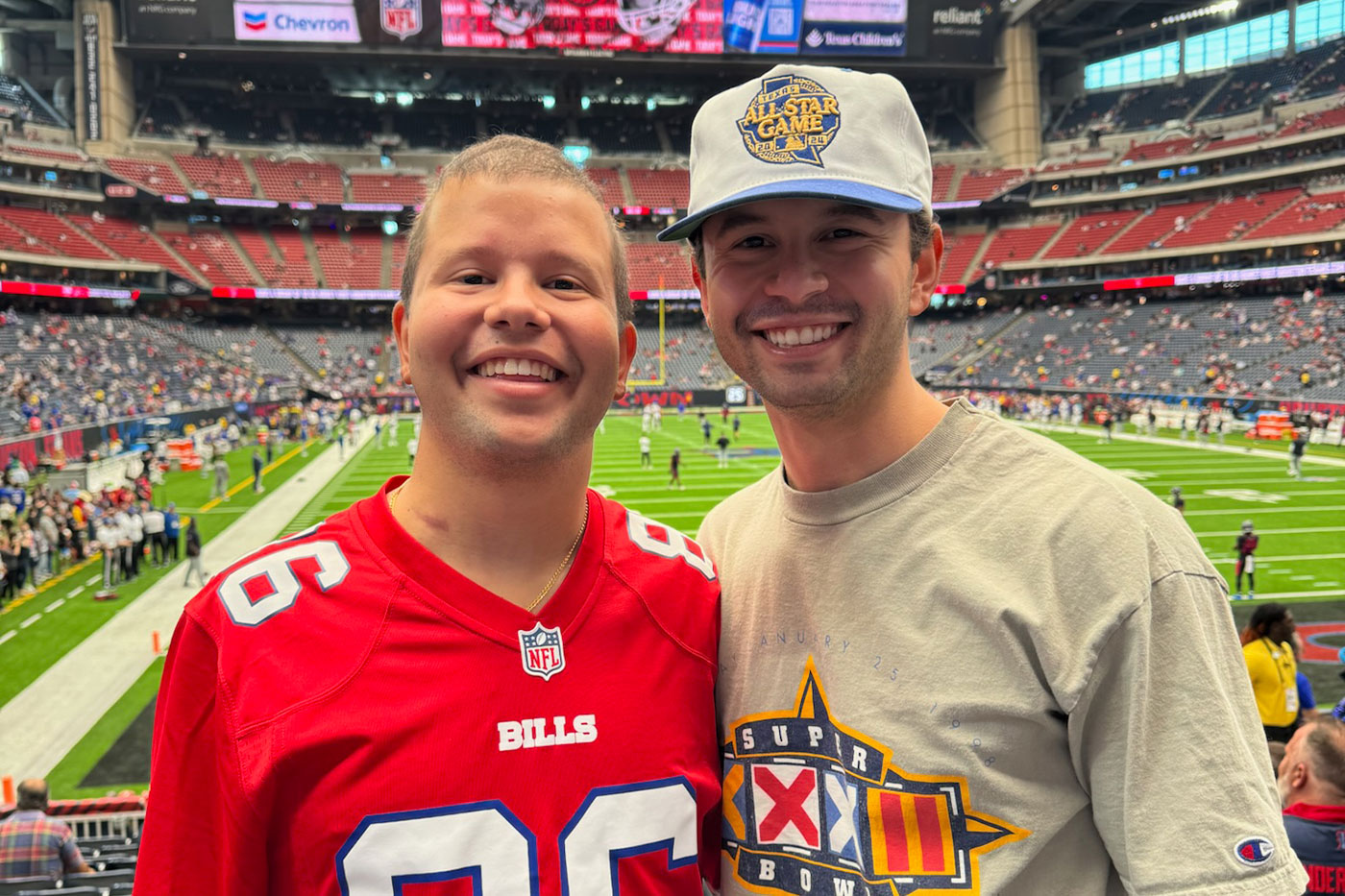

Aaron frequently reflects on his experience at Texas Tech.
“It just made sense. Even before I arrived at Texas Tech, it just felt like home,” he says. For his brother Aramis, Aaron’s decision to attend Texas Tech was more than just a choice, but an extension of their common journey.
Aaron resembled other new Red Raiders when he moved into Talkington Hall as a first-year student. He was anxious, excited and eager to begin the next chapter of his life. In those first weeks, life was simple – classes, new friends and the excitement of being on his own for the first time.
He swiftly settled into a rhythm on campus, juggling classes and weekends. Aaron took advantage of each opportunity that presented itself, whether it was joining his fraternity, Pi Kappa Alpha or participating in the Student Government Association. The university began to feel more like home, where he could develop and take initiative.

However, in September 2023, he noticed something that did not quite fit the pattern of a normal college experience: a stubborn lump that refused to subside on the side of his neck.
Initially, he dismissed it. Yet, the lump began to grow larger. What began as minor swelling now stretched nearly the length of his throat. Aaron was informed that it was most likely mononucleosis, which is inconvenient but not uncommon among college students.
The discomfort persisted as weeks stretched into months. Aaron knew it was time to seek alternative options when rest and antibiotics failed to ease his symptoms.
By July 2024, others were enjoying the luxury of being back home for the summer. Aaron, on the other hand, found himself sitting in the waiting room of a specialist’s office in Dallas. The sterile scent of antiseptic filled the space as muffled voices reverberated from behind closed doors.
The calm tone of the doctor’s voice as he examined Aaron’s neck did little to mask the worry in his eyes. The straightforward terms Aaron had desired were replaced with technical and obscure medical jargon like “biopsy” and “testing.”
As he sat beside his parents, he gradually began to comprehend this was not the common sickness he believed it to be. The severity of the situation took shape, forcing him to accept that classes, his fraternity and social life would have to wait.
Aaron began his first course of treatment for Stage 4 Hodgkin’s Lymphoma on July 18, 2024. That moment was straightforward, as he made a promise to himself that he would share his story honestly.
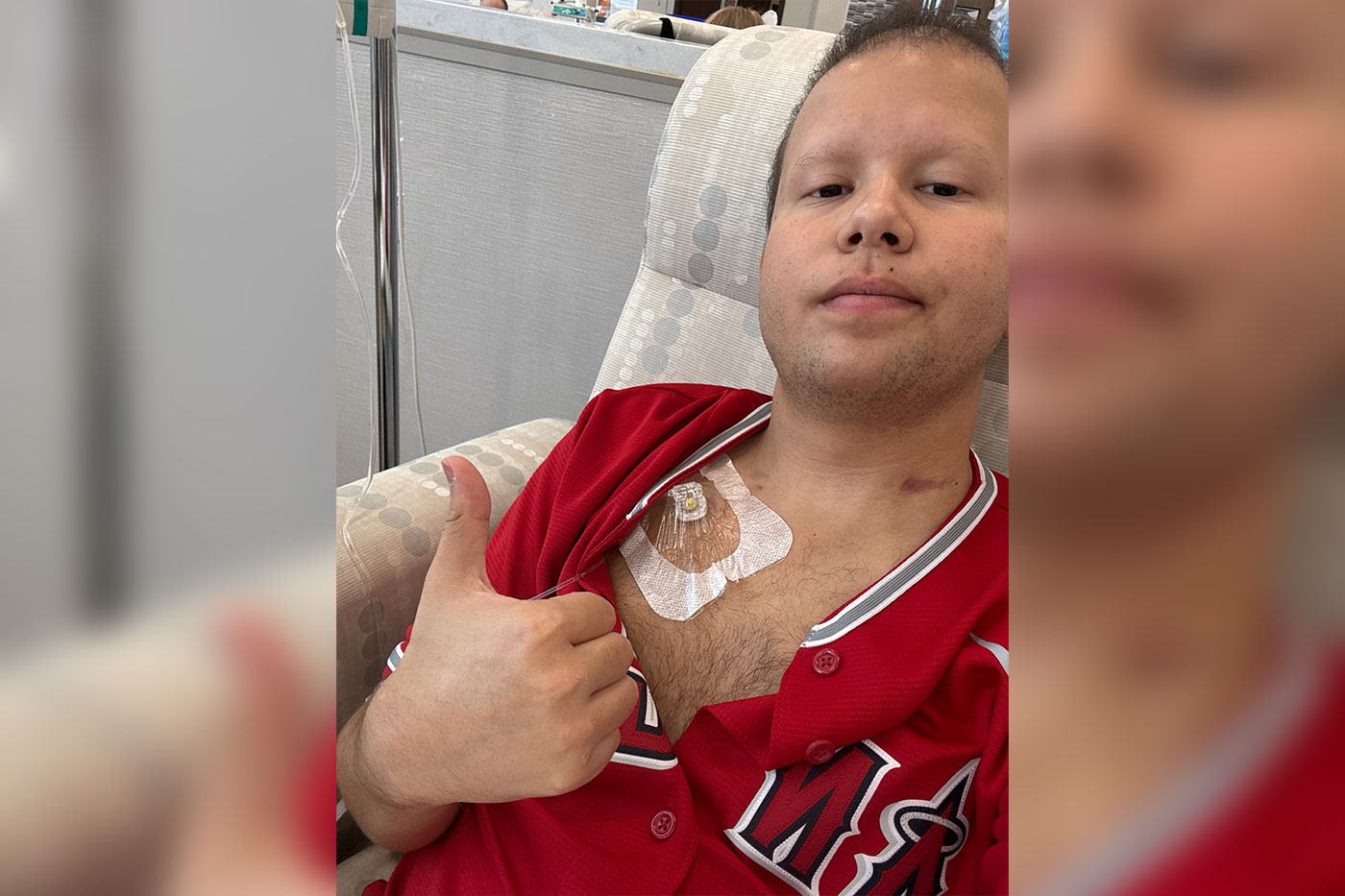
Following his diagnosis, Aaron’s daily life narrowed down to treatment schedules and the silent pursuit of recovery; his affinity for Texas Tech never dwindled. Aaron had built relationships with staff and faculty who rushed to support him, including Assistant Director of Advising and Retention Gracie Quintana.
Moved by the situation, Gracie connected Aaron to Student Business Services and colleagues in the scholarship office to help Aaron financially.
The connection with Gracie presented a strong, mutual understanding. Gracie revealed to Aaron that she herself was a cancer survivor. For Gracie, there was no need for explanation. As an educator, she harbored empathy for a student steering into an unimaginable challenge.
As someone who had overcome her own battle, Gracie understood the reality of what was ahead. In doing so, she committed to keeping the motivation Aaron possessed flourishing.
“His unwillingness to see himself as a victim inspired me to help find solutions,” Gracie said. “I got to live life before my cancer, but he is just a kid.”
During the initial round, chemotherapy was a heavy adjustment. The hospital days blended with IV lines, check-ups and nurses arriving and departing with well-honed poise. It was a strange mix of fear and hope for Aaron, not knowing what to expect. Nonetheless, he was determined to face it head on.
By the second round, he started to notice slight changes. His fatigue grew, and his appetite shifted, but the swelling in his neck began to subside.
Sharing his journey online started simply as a space for Aaron to express himself. Soon, though, his account blossomed into something bigger, reaching TikTok viewers by the thousands with life’s ups, downs and all that fell in the middle.
Millions tuned in to his video, “Advice from a 20-year-old with Stage 4 cancer,” drawn in by the strength behind what he said, not shock or pity. He talked about appreciating little wins: his body was putting up a strong fight against cancer. In September, he was following more treatment, embracing grit alongside gratitude.
The rhythm of Aaron’s former campus bustle was replaced by beeping equipment and quiet footsteps. Despite everything, he stayed linked to friends by posting updates online, urging them forward and reminding everyone to find gratitude in life, even in the mundane. Despite harsher therapies, Aaron stayed hopeful. Each update shared insight alongside grit. It showed that recovery is often not straightforward, but bravery appears in countless ways.
As the sixth round of chemotherapy began, Aaron shared a video reflecting his mindset as he reached the halfway point of treatment. In the video, he candidly expressed how he once associated cancer with weakness and the inability to live a normal life. Over time, his perception changed.
“It takes everything, both physically and mentally, out of you,” Aaron said. “You have to wake up every single day, look in the mirror and see that you are getting even more and more unhealthy. But you’re still willing to overcome that every day.”
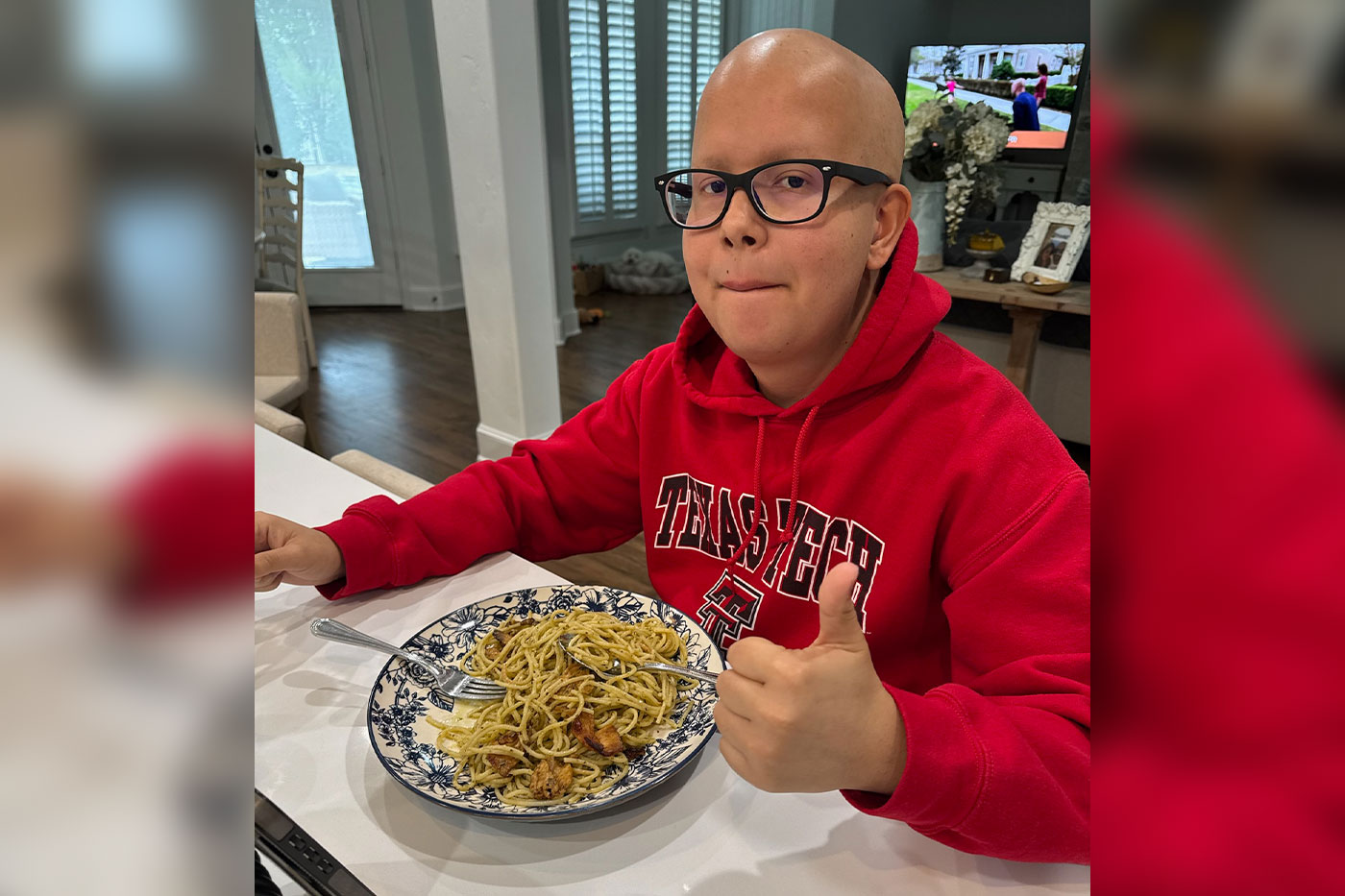
By October 2024, chemotherapy had taken a physical toll on Aaron. His brown hair thinned, collecting on pillows, in sinks and between fingers. The treatments, once a source of hope, now just left him exhausted. Days blurred together: hospital visits, medications, brief reprieves from sickness. Yet he remained hopeful. In one of his videos, he said, “You can do it, and you’re stronger than you know. That’s what I’ve really learned throughout this experience.”
That strength was reflected back to him during the 2024 World Series with a surprise arranged by his family.
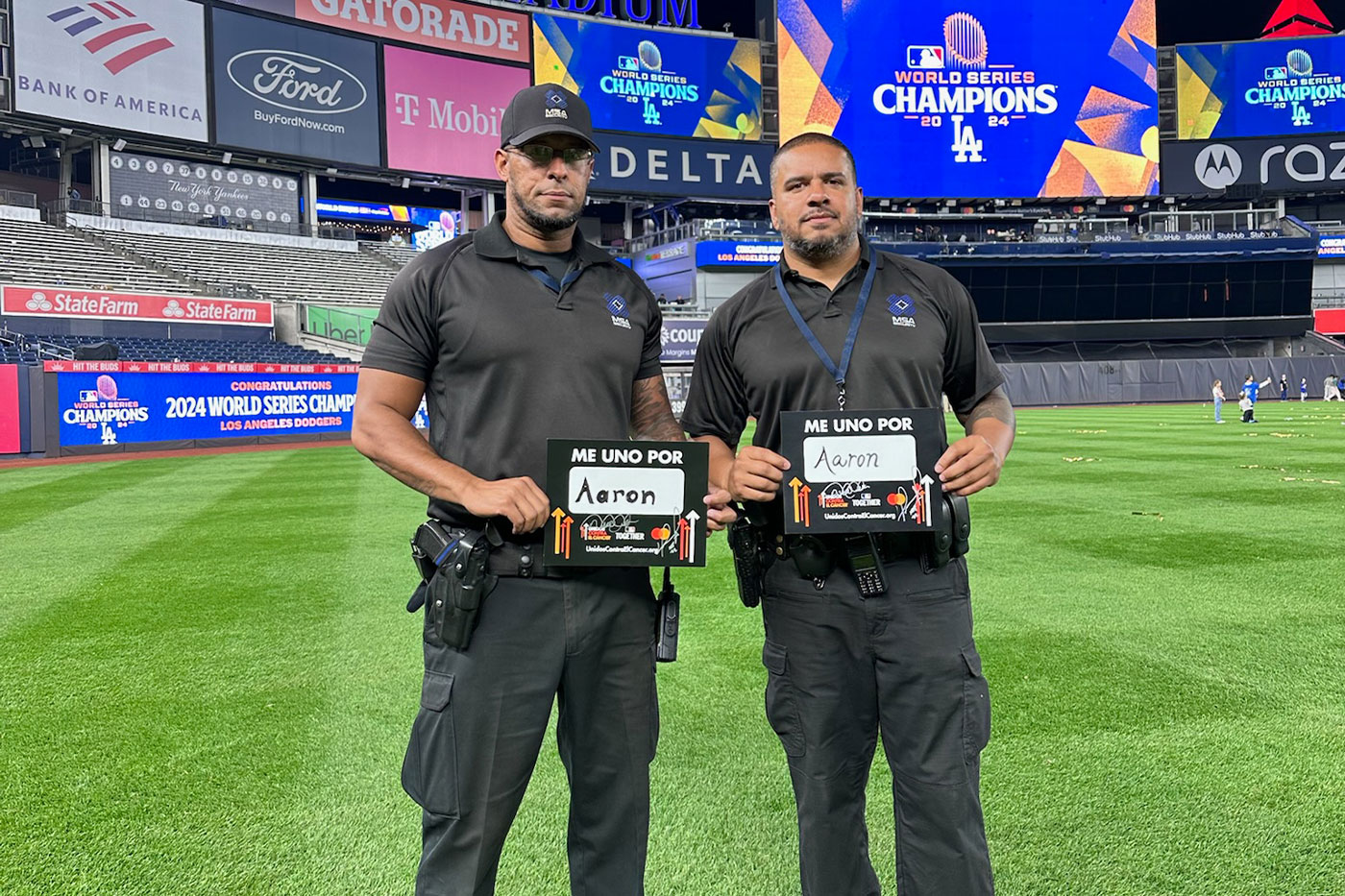
Aaron’s father was a former New York City Police Officer, and when the New York Yankees played the Los Angeles Dodgers in the 2024 World Series, Aaron’s father contacted some of his old colleagues. The officers put Aaron’s name on one of the “Stand Up for Cancer” placards, an in-game fixture MLB Together has featured during the World Series over the past two decades.
The moment allows those in attendance to write the name of a loved one affected by cancer, honoring those battling the disease and those who have passed away.
Aaron, a lifelong Yankees fan, watched from home in awe.
After the game ended, not with the outcome he would have liked, Aaron got a photo from two of his dad’s friends posing in the outfield of Yankee Stadium holding cards with Aaron’s name on them.
But what caught his eye were the autographs on those cards.
“They had got Derek Jeter and David Ortiz to sign them for me,” Aaron recalls. “Those guys are some of my favorite athletes ever, and hearing that they told me to keep fighting helped me stay strong.”

December brought the end of Aaron’s chemotherapy treatments; he could see himself being immersed in his normal life again. An untroubled smile fell on the face of loved ones. Aaron approached the hospital bell rung by cancer patients signaling the beginning of the end of treatment.
“After 12 intensive rounds of chemotherapy, I’m one step closer to remission. God is good, "Aaron said in a TikTok video. “Ring this bell, three times well, it’s toll to clearly say my treatment’s done, this course is run, and I am on my way.”
Unfortunately, Aaron learned devastating news that the cancer was back in January. A PET scan showed an influx of residual cells in his neck. That brief joy dissolved into worry once more. Still, Aaron met this setback with the strength he previously showed, persistently tackling each difficulty.
The news of cancer’s return didn’t shock him; it echoed a familiar tune. Yet this recurrence carried a new weight as he knew how tolling the treatments could be.
Another hard choice landed before Aaron. He delayed going back to school once more. Even from a distance, the spirit of the Red Raiders stayed with him. His fraternity held events to help cover medical expenses, while teachers showed they cared by keeping in touch.
February saw him start stronger chemotherapy, which built up to a bone marrow transplant planned for the following month.
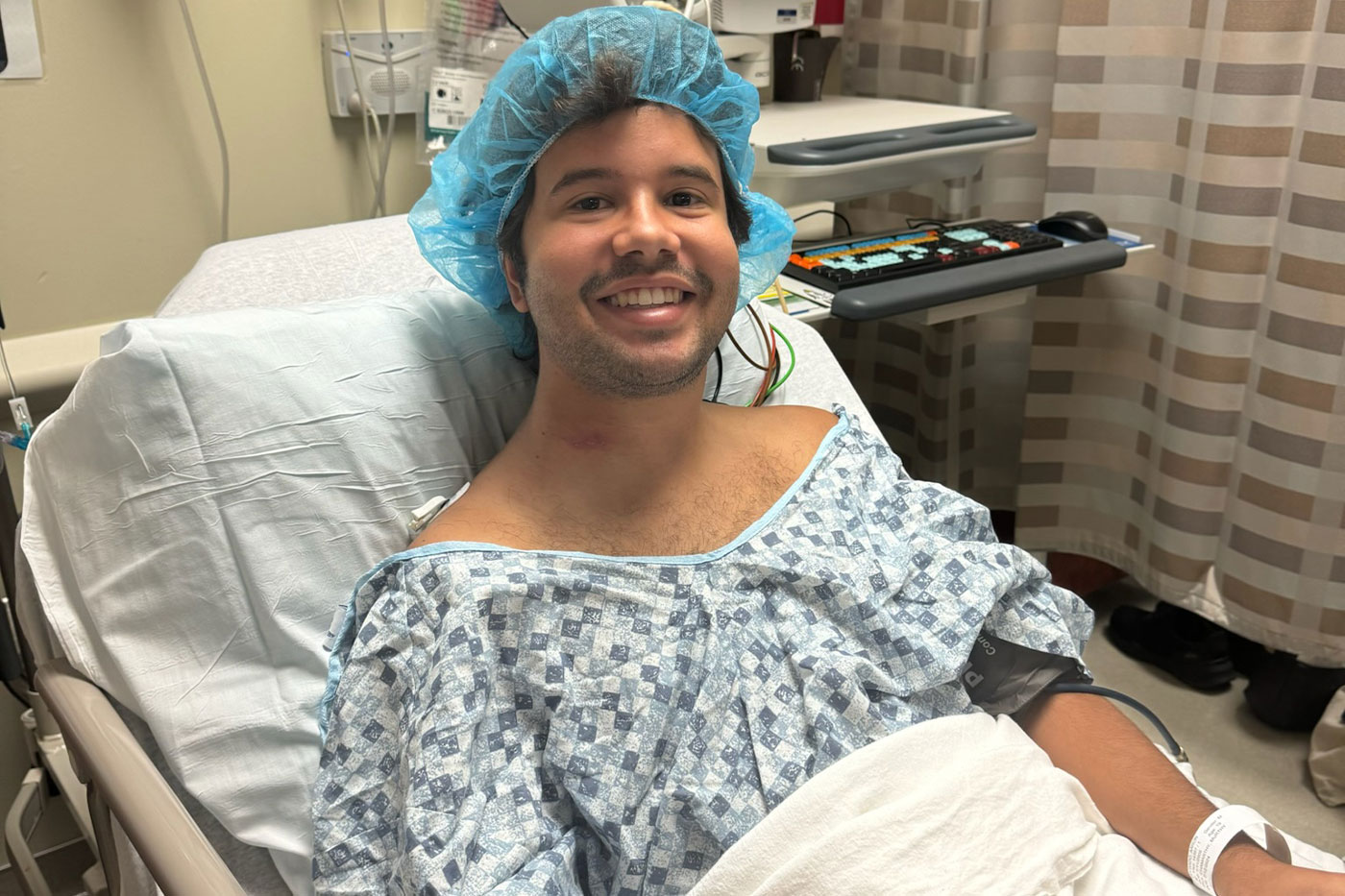
Aaron was hospitalized for most of March. It was back to the start, the rhythm of machines and nurses shuffling back and forth and footsteps marking the passing of time. Aaron realized that his life was becoming reduced to somewhat of a routine. A routine that consisted of the same thing every couple of weeks – waiting for news, lab results and treatment schedules.
He devoted his time to journaling, made short videos and held on to what he saw as everyday moments. In some videos, he candidly expressed the realities of his treatment and the triumphs that he got through.
Despite its challenges, the transplant was successful.
By April 2025, Aaron’s cancer had vanished. The subsequent relief seemed muted, but nonetheless profound. He finally found security to lean on after months of uncertainty.
As summer arrived, so did Aaron’s energy. His hair began to grow back, a small yet powerful indication of his recovery. The fatigue that once weighed him down began to shift into energy. Each day was a new beginning, and it was proof that his strength never left him.
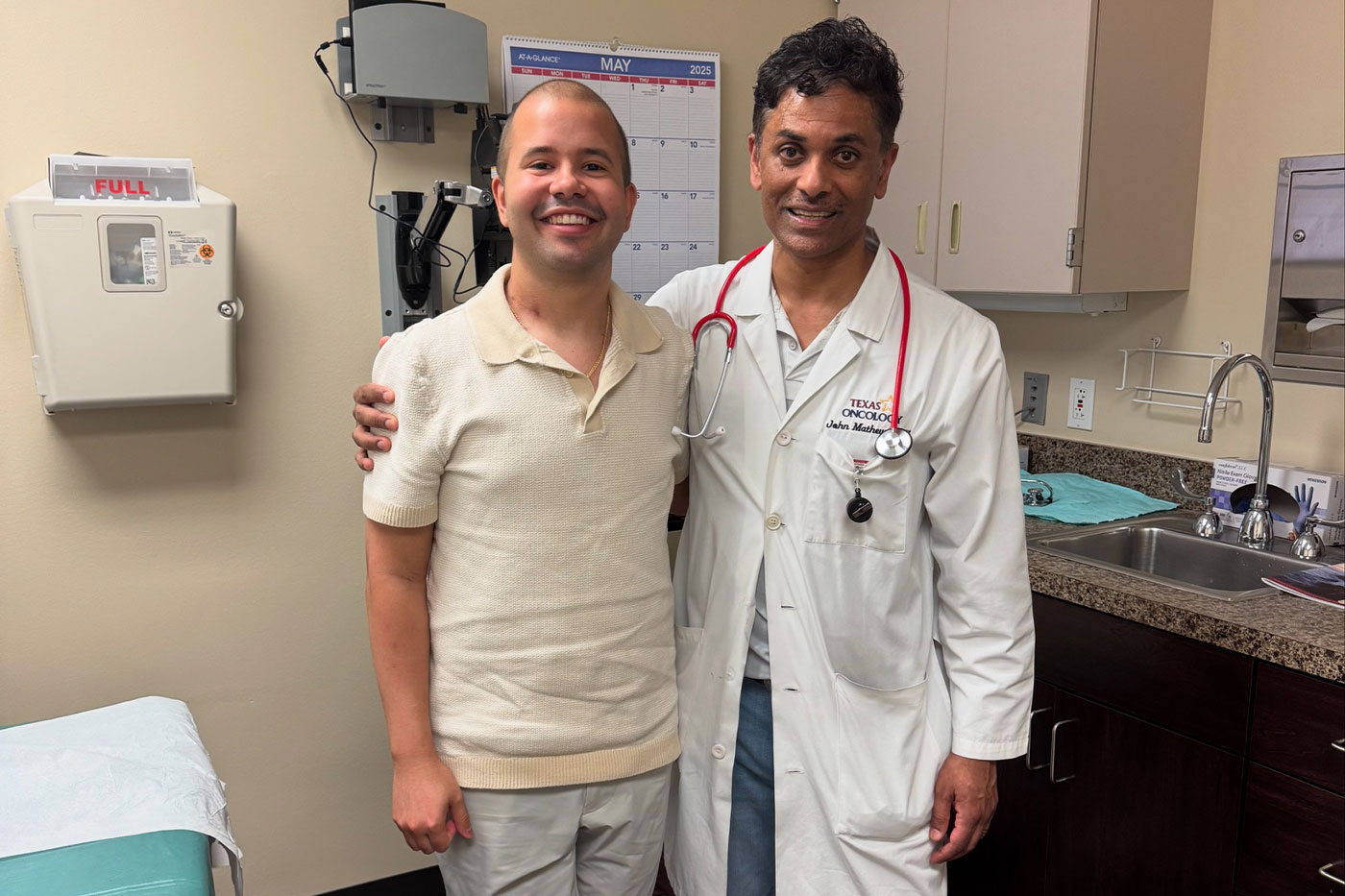

When August came, Aaron was finally back in Lubbock. The campus that had once marked a fresh beginning now stood for something more profound. Life following his diagnosis did not simply mean returning to a normal life. It demanded constructing a new “normal” that fostered what he had endured.
“You realize how much those small moments matter,” Aaron said. “Everything has a greater significance to me now.”
Today, Aaron is no longer living in Talkington Hall, but in a house off campus. He is back to completing his degree and receives maintenance chemotherapy.
“There are so many people that want to be in school right now,” Aaron said. “I was one of those people. So now, I try not to place as much pressure on myself. Because I’m waking up every day to enjoy my life.”