
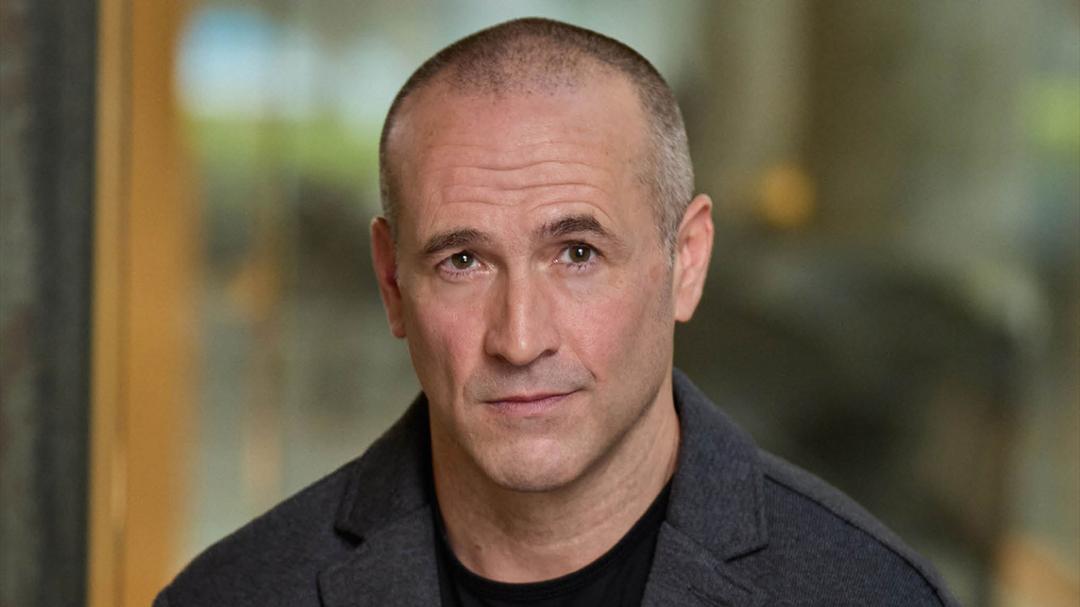

This architecture graduate is grateful for how others saw his promise and potential and challenged him to see it as well.
Heath May can look back with a sense of gratitude. He knows where he stands today is a direct result of a lot of little decisions along the way with none bearing more weight than when he made up his mind to attend Texas Tech University.
Monday (Feb. 9), he will return to the Huckabee College of Architecture, the place that left a lasting imprint upon his life, when he speaks as part of the college’s lecture series, which features presentations throughout the academic year from experts in various disciplines across architecture.
The moment is not lost on May, whose 3:30 p.m. lecture is entitled, “point line plain, Has Architecture Become Fragile?”
“This is a deep thing for me,” he begins, summing up the emotions associated with the honor. “First, I feel immense gratitude for the opportunities I have had on my journey, and much of what I do today traces back to seeking an education in architecture at Texas Tech.”
Originally from Plainview, Heath’s father was a high school football coach, and his mother was a teacher. Both are Texas Tech graduates. He has carved out his own path of success, having been tabbed, effective Jan. 1, CEO of the sprawling HKS architecture firm, where he has spent the past 22 years.
“When I think about the chance to come back and lecture, it’s an opportunity to be reminded where I come from,” he said. “That’s always been important to me, to not lose sight of where I came from because there’s a spirit, a work ethic, an accountability, that I grew up with.”
The lecture is important for other reasons as well. Heath has always felt a strong sense of obligation to give back to the next generation of architects. He enjoys connecting with students, hearing their stories, and providing them with encouragement and insights.
Heath’s journey is one Upe Flueckiger, dean of the architecture college, has enjoyed watching.
“Texas Tech conducted experimental E-Studios for third- and fourth-year undergraduate students,” he said. “Heath May, a student at the time, was enrolled in the E-Studio taught by professor (Robert) Perl some 25 years ago. Educating students in building and computing technology has a long history and tradition at the HCOA.
“Fast forward more than a quarter century later, and it is wonderful to see Heath May, FAIA, in the role of CEO and chairman at HKS, one of the nation’s leading architectural firms. It’s a testament to my colleagues who taught Heath all those years ago, and it is a privilege and an honor to welcome him back to his alma mater as he contributes to our lecture series entitled Im/Material.”
Heath says interacting with students is one of the most energizing and exciting duties, especially now that he has transitioned into this new role.
“Young people entering the professions and coming into school are seeing the world wide open,” he said. “It’s exciting right now because there are so many things happening, both outside and around us, but particularly with technology.”
The Changing Face of Architecture
An especially noteworthy development in architecture, as is the case with many other creative disciplines, is the emergence of artificial intelligence (AI) and how it can be used to complement and amplify human efforts. The AI landscape is changing quickly, and those who know how to capitalize on AI will reap impressive benefits.
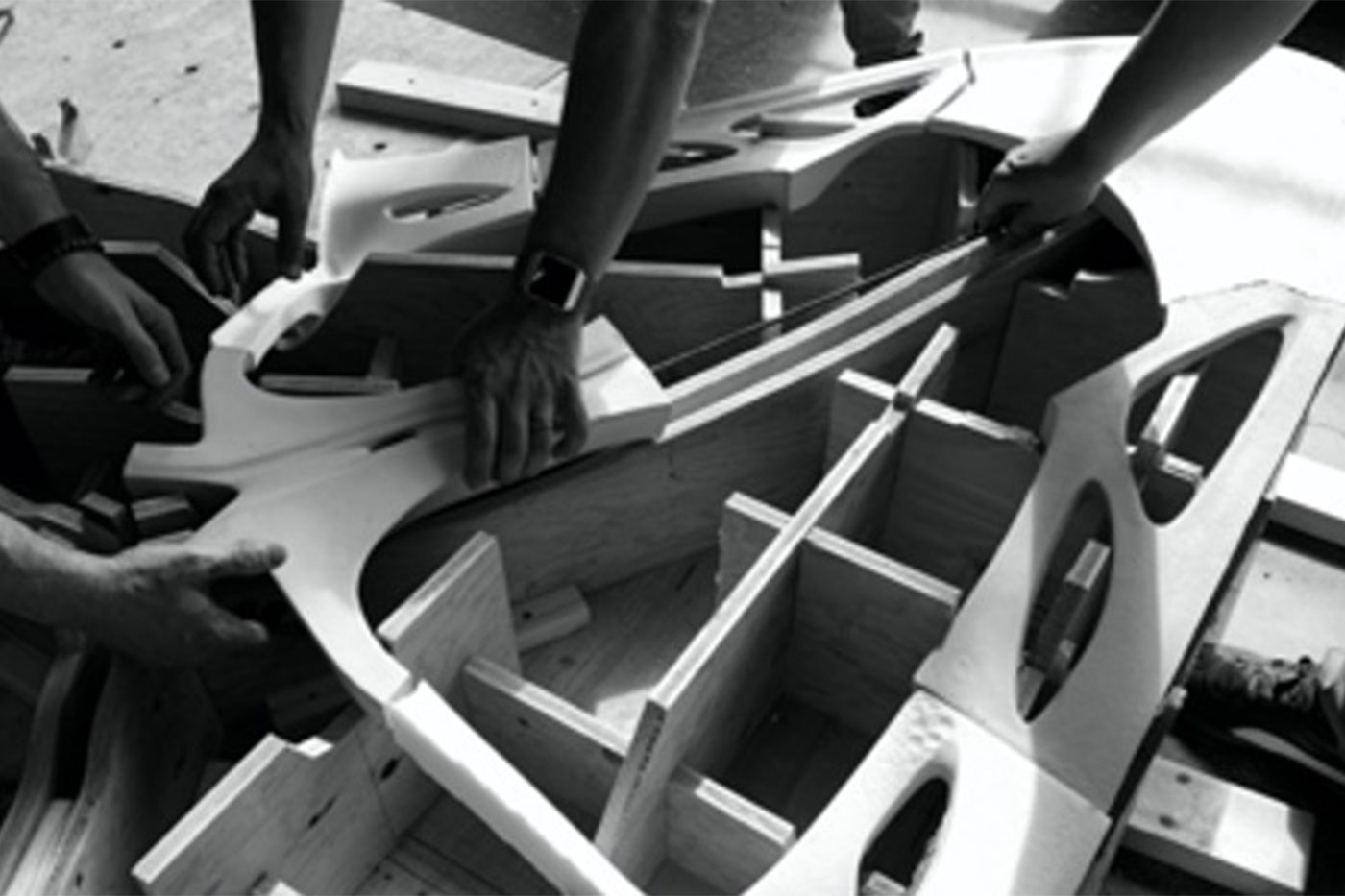
“Architecture has always had this really interesting relation to technology,” he said. “What’s happening in the world with AI represents a new horizon. The chance to speak with people about the different ways you can pursue a career in architecture, engineering and construction (AEC), kind of makes me want to go back to school these days.”
Heath says he was the beneficiary of more than a few professional mentors through the years taking an interest in him and his career. In some cases, he said people saw more potential than he saw in himself.
“I did not follow a linear path,” he says with a smile. “And I could be relatively stubborn at times about things. It was strongly suggested, maybe even pushed on me, around middle school, that architecture would be something I would be good at. Maybe that suggestion is why I resisted it.”
With the benefit of hindsight, Heath realizes there was a time when he failed to understand the difference between art and design. Simply put, he has always been more interested in the way an idea was expressed than the idea itself. Maybe that is one of the reasons his academic career began at what is now Texas State University studying biology and art.
He came to realize, in short order, that was not the path for him. So, he decided to attend Texas Tech and study architecture.
“That was the best decision I ever made in terms of academics,” he said. “From day one, I was enthralled with the subject matter. It never felt like work to me. Yes, there were long hours and all-nighters, but I just loved it.”
His career trajectory has been punctuated by people challenging him to take the next step in his journey – even if he might not be ready for it. Their perspective often caused him to see a challenge or project in a different way.
“Throughout my life, I found myself consistently being afforded opportunity, perhaps before I was truly ready,” he said. “There is this mentality of making a promise beyond your ability and taking on something that feels a little bigger than what you’re able to accomplish.”
Why Reciprocity Matters
The responsibility of paying it forward crystallized for Heath during a leadership course with the American Institute of Architects (AIA) Dallas chapter. One of the concepts that resonated with him was the idea of reciprocity.
Likewise, Heath enjoyed a stint as an adjunct assistant professor for the University of Texas at Arlington, where he taught advanced graduate studio.
“It is always difficult to juggle teaching while you practice,” he said, “especially with the types of projects we do and making sure we serve our clients, but I wouldn’t have it any other way. I always felt that in order to be a good practitioner, I needed to understand the academic side and teach.”
Throughout his career, Heath has been a trailblazer in the profession with particular expertise in leveraging computational design to enhance project work and deliver increasingly refined iterations.
It represents the best of both worlds. Computers can handle large quantities of data, automate processes and provide possible solutions quickly, compressing timelines for deliverables. From there, the team continues to evaluate and develop the project design per client specifications using feedback from computer simulation.
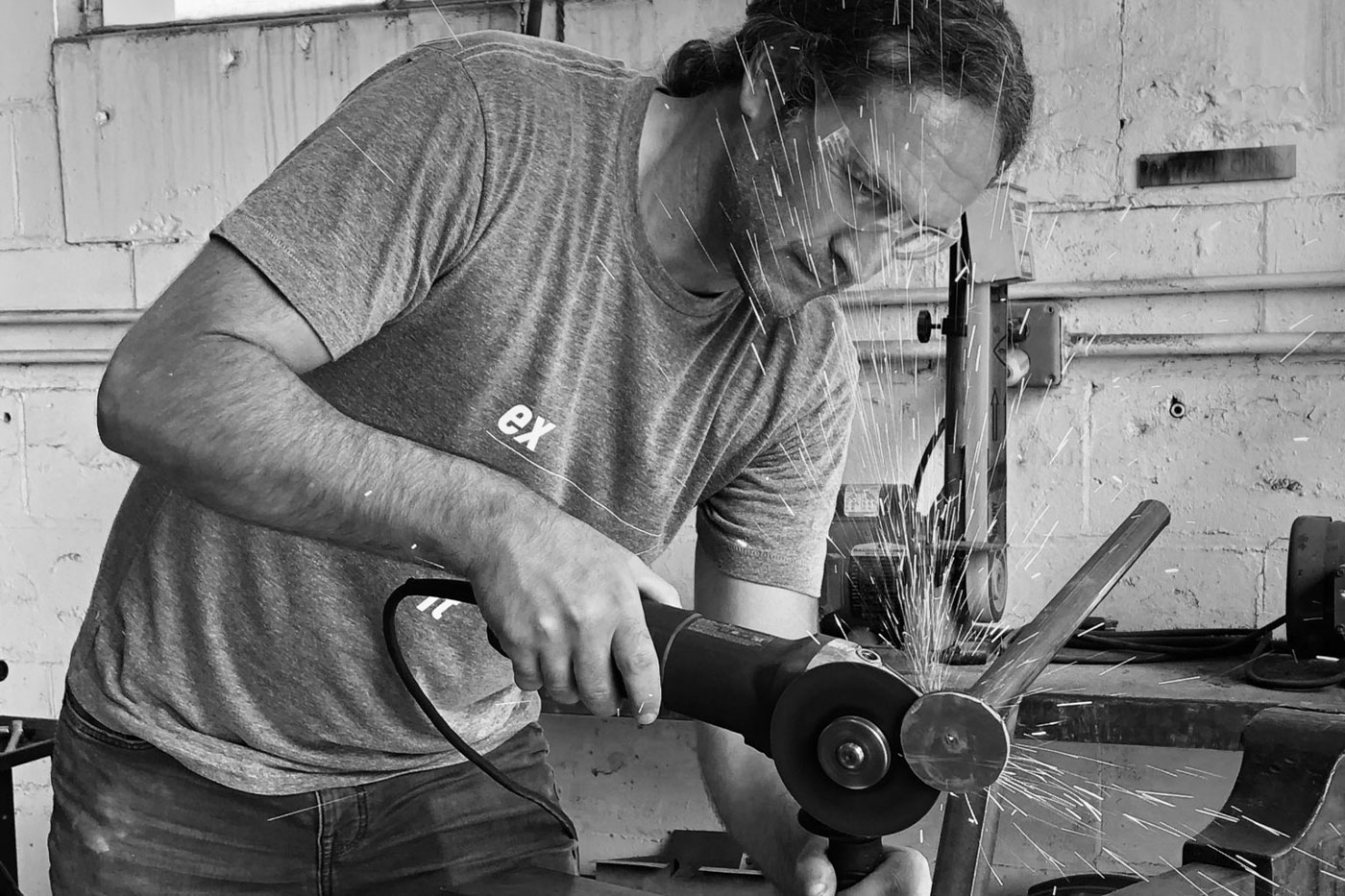
“There might be something that came from the initial stroke of a pen or an initial idea, but generally, you go through many iterations to arrive at what the project is about,” Heath said. “Computational design brings in some elements of architecture along with computer science, and it allows us to use more advanced computer techniques to solve problems.”
For example, the team might have a 3D project model that computational design would allow be seen in a different way, providing important insights into material limits, geometric and structural implications and energy impacts.
The successes and opportunities, as Heath sees it, are a direct result of his time at Texas Tech and being exposed to professors who had practiced architecture all over the world.
“At that time, Dean Flueckiger was relatively new to the college,” Heath recalled. “He was starting to step in and bring some of his global experiences, and that was something that was profound to me, thinking how many of the architects we studied were so influential throughout the course of history.”
Challenged at Every Turn
He said the architecture curriculum challenged students to look seriously at how objects were constructed, designed and accessed.
“There was a good reconciliation between the conceptual design work that we did, and the implementation part of that,” he said. “That never got out of balance while I was in school. We had to think creatively, but we also had to think about how it would be implemented.”
Heath also remembered the impact of people throughout his Texas Tech journey. He recalled how significant several drawing classes he took prior to beginning the architecture program were for him.
Drawing is something that has stayed with him even to this day.
“That was actually my path into architecture,” he said. “It’s somewhat ironic, considering I ended up leveraging a computer, but I still draw every day. It’s something that has held with me.”
Something else that has stayed with him is the almost serendipitous impact of others on his life. Like many students, when Heath began at Texas Tech, he was also working. His first job was framing houses in Lubbock, which led to a busy schedule and showing up for classes with sawdust in his hair.
The hours were long and demanding, and it was a challenge balancing work and class. That’s when he responded to an advertisement and met Michael Glass.
Glass was the director of maintenance at the Student Union Building, and he was looking for an assistant with a background in maintenance and construction. Heath got the job. His schedule became a little smoother.
And he was on his way.
“I worked at the Student Union Building while I was in school, and that really allowed me to make it all work,” he said. “It was very, very critical to me making it through school.”
After earning his degree, Heath said his career plans fluctuated, especially early. However, he found a role at HKS and steadily worked his way up through the ranks, delivering for clients, building effective teams and working on breathtaking projects (like SoFi stadium in Los Angeles and the Pacific Plaza Pavillion in Dallas).
“Heath has grown his architectural knowledge to an exemplary level during dynamic times,” Flueckiger said, “and his work is an inspiration to us all.”
Heath has never met a project he didn’t enjoy working on, although there have been some smaller projects that were particularly satisfying like the new dining facility for Alcon Laboratories and Novartis Pharmaceuticals
“I have learned to be agile,” he said. “I think these days, that’s even more challenging because things are changing so fast around us. Having a 10-year plan really kind of boxes you in because if you become too dogmatic as far as what that means, you are going to miss a lot of opportunities.”
As a result, work hasn’t been labor, and time hasn’t dragged. Heath is amazed how quickly the past two plus decades have zipped by.
“It has offered ample moments to savor along the way, too,” he said. “I wasn’t sure I wanted to work for a large firm when I came to HKS. I wasn’t sure it would be a good fit because of the type of work I was interested in. I was skeptical that could happen at a large firm.”
However, those doubts soon vanished for a couple of reasons. The organization was filled with talented people who knew how to collaborate and get work done, and the firm was large enough where he could learn on the fly.
“HKS really could nurture entrepreneurial ideas,” he said. “And early in my career, I had a great mentor in Eddie Abeyta, who really held design to a high standard.”
A few years later, Heath pitched his own entrepreneurial vision: The Laboratory for INtensive Exploration, or LINE, which gave the firm a new way to not only attack complex and ambitious projects but to provide innovative ideas and solutions.
“We developed LINE around 2012,” he said. “We were able to operate as a small studio and test new technology, new materials and push the boundaries of what we thought could be possible and really start to affect work.”
In the CEO role, Heath is learning a new level of agility. He not only takes over as a leader, but he also is responsible for maintaining the HKS culture and keeping people at the center of the firm’s success.
“We see design as a verb,” he said. “It’s not a part or a phase of what we do. It’s everything that we do. We all contribute to that, and one of the things I am working on now is helping every one of us understand that, whether you’re on the front end of design, working in our financial group or working in HR, we are all contributing to the design of places that improve people’s lives.
“That’s the charge here – to think about how we are all on this path together and how we can continue to navigate together this world that is changing around us so quickly.”