
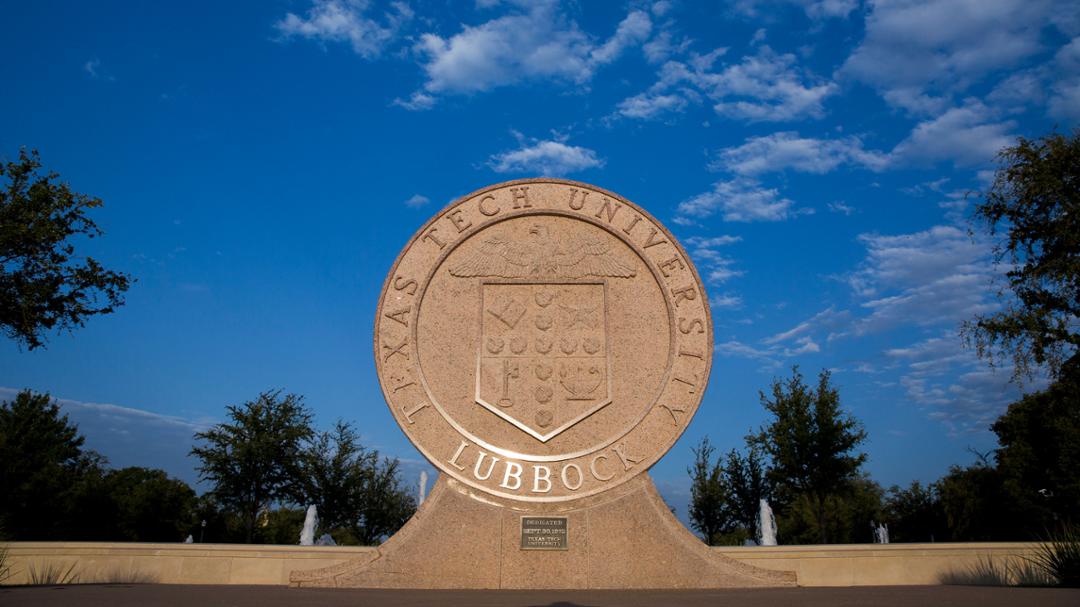

The open-access journal shines a spotlight on undergraduate student research, widening the university’s research enterprise.
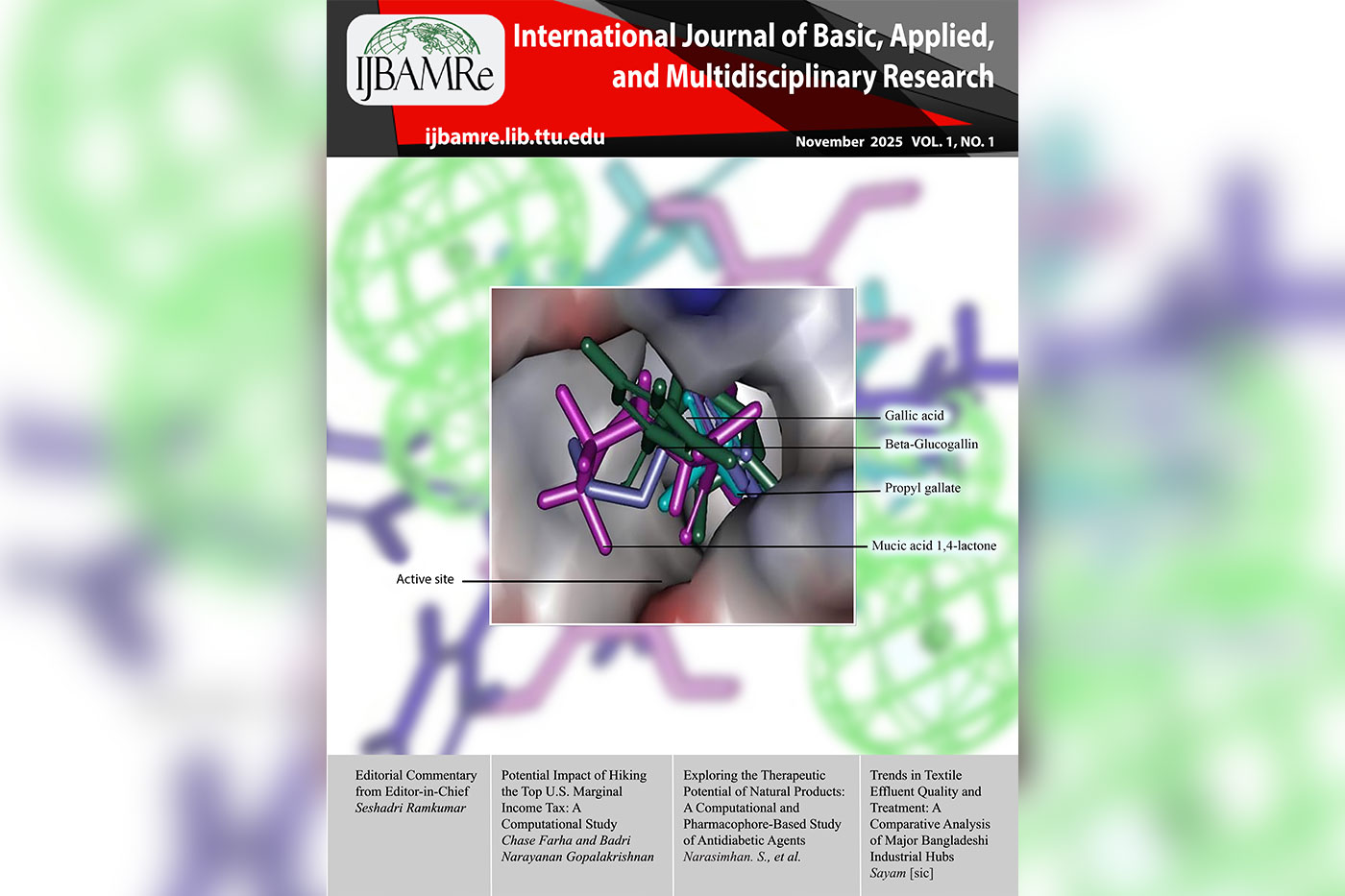
In November, Texas Tech University published the first issue of the International Journal of Basic, Applied and Multidisciplinary Research (IJBAMRe).
The journal, developed by the College of Arts & Sciences, will publish peer-reviewed multidisciplinary research from U.S. and international scholars across all career stages. This includes emerging researchers, namely undergraduate students, giving them a chance to experience the academic publishing cycle and have their work cited by future studies. Because of these factors, the IJBAMRe is available to contributors and readers via open access protocols.
“The release of the first issue of the IJBAMRe is a fantastic accomplishment for the college and Texas Tech and a labor of love for the team,” said Tosha Dupras, dean of Arts & Sciences and a member of the international editorial advisory board for the journal.
The topics of the first issue include the impacts of increasing the U.S. marginal income tax, the therapeutic potential of natural products, an analysis of wastewater from Bangladeshi textile manufacturers and an editorial commentary on the next phase of research.
Amelia Talley, associate dean for research and engaged scholarship and professor of psychological sciences, is a member of the journal’s managing board and celebrates the potential impact this journal can have for the general public.
“This effort began as a way for Texas Tech to offer a free-to-publish and free-to-read open-access journal that encouraged multidisciplinary advancements to address large issues facing our global society, as well as a dedicated platform to showcase cutting-edge research and creative scholarly work from students and trainees,” Talley said.
Elevate Emerging Researchers
From its inception, one goal of the IJBAMRe was to provide a platform for emerging scholars, including high school, undergraduate and graduate students, as well as postdoctoral and early-career researchers.
Though the Center for Transformative Undergraduate Experiences (TrUE) provides students with opportunities to conduct and present research at events like the Undergraduate Research Conference and Fall Symposium, the opportunity for undergraduate research to be cited in a peer-reviewed publication was still lacking.
Ernest Smith, professor of environmental toxicology and a member of the journal’s editorial team, led the charge to spotlight undergraduate research in the IJBAMRe.
As Smith puts it, he had assisted undergraduate student research for several years and felt students needed something tangible for their future job or graduate school applications.
“I think this provides the students with a good starting point that sets them off on the right track,” Smith said. “If they have had the experience of putting a manuscript together, that means they would have gone through a full research cycle.”
Students who participated in TrUE events or helped a faculty mentor publish a manuscript but never received a writing credit could speak about research in an interview or write about it in an application essay. However, they lacked a citation to include in their resume or CV – something that could stand on its own as evidence of their familiarity with the entire research cycle.
The expectation is that the IJBAMRe can fill that gap.
“I think a product speaks louder than words,” Smith said. “Students won’t have to just say they’ve done research; they can actually prove it.”
Multidisciplinary and International Approach
A unique aspect of the IJBAMRe is its multidisciplinary approach that places arts and humanities scholarship side-by-side with science, technology, math and engineering research.
“I think the audience is very wide,” Smith said about the approach. “It’s a way of broadening the perspective and exposing researchers to other things they weren’t thinking about.”
Seshadri Ramkumar, professor of environmental toxicology and editor in chief of the IJBAMRe, believes this multidisciplinary aspect turns the journal into a representation of Texas Tech, a place where students from all disciplines can come and learn.
“It’s an ambitious goal, and to me, very few journals would be as comprehensive as this,” Ramkumar said. “That’s a unique aspect of the journal.”
As editor in chief, Ramkumar focused on bringing the editorial board together. Specifically, he worked to bring on researchers at international universities and other U.S.-based R1 schools, similar to Texas Tech. An R1 school is classified as having “very high research activity” by the Carnegie Classification of Institutions of Higher Education.
Through Ramkumar’s efforts, the editorial board consists of researchers from schools like University of Georgia, Cornell University, Emory University and National University of Singapore. There are also members from the International Cotton Advisory Council and Asthagiri Herbal Research Foundation in India.
The first issue encapsulates the unique approach, featuring manuscripts from researchers based in the U.S., Bangladesh and India.
“I am excited that we are able to give a platform for international authors to submit their research and come into a global discussion,” Ramkumar said. “We need a global discussion platform.”
Open Access, Major Impact
The goals of spotlighting emerging and undergraduate researchers and maintaining a multidisciplinary and international approach naturally led to the need for the journal to be open access.
For a researcher beginning their career, publishing in long-established journals is nice, but that often comes with barriers to access, both for the researcher and potential readers.
“Many journals are published by companies which charge exorbitant subscription prices for access and may even charge authors for open-access publishing so that their work is more available to the public,” said Dupras. “A university journal with open-access publishing, such as the IJBAMRe, brings access and impact to our faculty and students, and to Texas Tech as a whole.”
IJBAMRe members believe the journal puts Texas Tech at the front lines for making research more accessible to scholars and the public while enhancing the university’s research culture.
“We, as a university, have been writing good grants, getting federal money and foundation support, publishing papers and mentoring students,” Ramkumar said. “With this journal, other universities are going to come to Texas Tech to publish their findings. It will increase credibility on a broader scale.”
IJBAMRe members are also aware that patience is required here. Several years of sustained publishing are needed to achieve recognition by major citation indexes, which will enable citation tracking and enhance the journal’s visibility.
Still, there is a lot to be proud of and excited for as the IJBAMRe’s initial issue is distributed far and wide.
“Members of the Red Raider family should feel proud of this effort, which provides a platform to showcase the value of collaborative approaches to research and discovery that draw from multiple fields and disciplines,” Talley said. “This type of approach has often been shown to result in better outcomes when we seek to tackle the tough challenges and remind our local and global communities ‘From Here, It’s Possible.™’”