
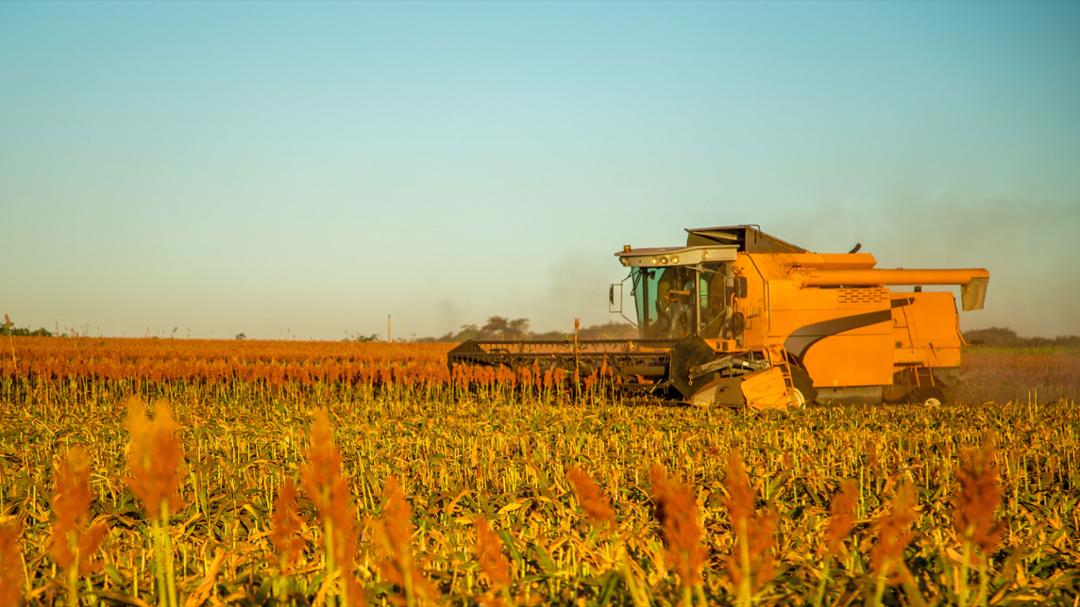

For the first time, the Global Sorghum Conference will be held in the U.S.
Thought leaders, cutting-edge research and vibrant partnerships with key stakeholder groups are just a few of the reasons Texas Tech University’s Davis College of Agricultural Sciences & Natural Resources and Research & Innovation will host the 2026 Global Sorghum Conference.
The event, expected to bring together a cross-section of international representatives to discuss and assess the future of the key crop is scheduled to take place Sept. 14-18 at the Memorial Civic Center in Lubbock. This marks the first time the event has been held in the United States, and the selection of Texas Tech as host is one more acknowledgment of the university’s burgeoning research enterprise and reputation.

For more information on the 2026 Global Sorghum Conference, click here.
“We are an R1 University that is continuing to grow in our research,” said Monty Christian, executive director of marketing strategies for Research & Innovation. “We are doing cutting-edge sorghum research with some of the leading scientists at Texas Tech, and we are working with several organizations that make this a natural fit. It is an honor for Texas Tech to host this.”
Along those lines, the conference will feature a handful of primary themes for researchers, keynote speakers, vendors and presentations. These include agronomy, genomics, value streams and new energy, which will give Texas Tech the opportunity to showcase some of the extraordinary research taking place on and around its campus.
For example, Luis Herrera-Estrella, President’s Distinguished Professor of Plant Genomics and director of the Institute of Genomics for Crop Abiotic Stress Tolerance (IGCAST) at Texas Tech, is among the leading plant researchers in the world, focusing on how plants adapt to environmental extremes such as heat, cold and drought.
Likewise, Krishna Jagadish, professor and Thornton Distinguished Chair in the Department of Plant & Soil Science and director of the Texas Coalition for Sustainable Integrated Systems Research Program (TeCSIS), also leads important research initiatives aimed at enhancing environmental sustainability in the region.
Both are faculty members in Davis College. Texas Tech is also home to people like David Becker, the university’s executive director of agricultural research strategy, who is leading Texas Tech research in translational crop breeding. The university also has built important partnerships with the United Sorghum Checkoff Program and the National Sorghum Producers, both of which are based in Lubbock.
While the region has long been known for a thriving cotton agribusiness complex, sorghum has long been heralded for its resiliency and as a rotational crop for producers. It is well-known throughout the country and grows well on the High Plains of Texas.
As Christian explained, sorghum is an ancient grain that has become the fifth largest cereal crop in the world. Sorghum, which is gluten-free, is a water-conserving crop that has become important to the nation’s dairy industry because some producers throughout the area have shifted from corn silage to sorghum silage as a main source of fiber for dairy cattle.
“You can find sorghum throughout the state,” Christian said. “There is a high concentration of it around Corpus Christi as well as the High Plains here. It is grown in Kansas and across the Great Plains. It can be grown in Arkansas, Alabama, Illinois or Indiana. In this part of the country, it fits well because it likes the climate and is a great rotation crop. It can give producers a different income stream and it also supports the cattle and dairy industries.”
The first Global Sorghum Conference was held in South Africa in 2018 with the most recent one held in France in 2023. This conference is the result of some three years of work by Texas Tech and strategic sorghum-focused partners.
“We put the bid in back in 2023,” Christian said, “and you’re thinking that you have a lot of time. But we’ve had a lot of work to do. We’ve worked with the Global Sorghum Association through regular calls focused on sponsorships, speakers and those sorts of things.”
In addition to the presentations and keynote addresses, Christian emphasized the event is a network-building opportunity for those who attend.
“It is not only learning about the science and new things going on, whether in this country or around the world, but the chance to network is also invaluable,” he said.