
Computer Engineering
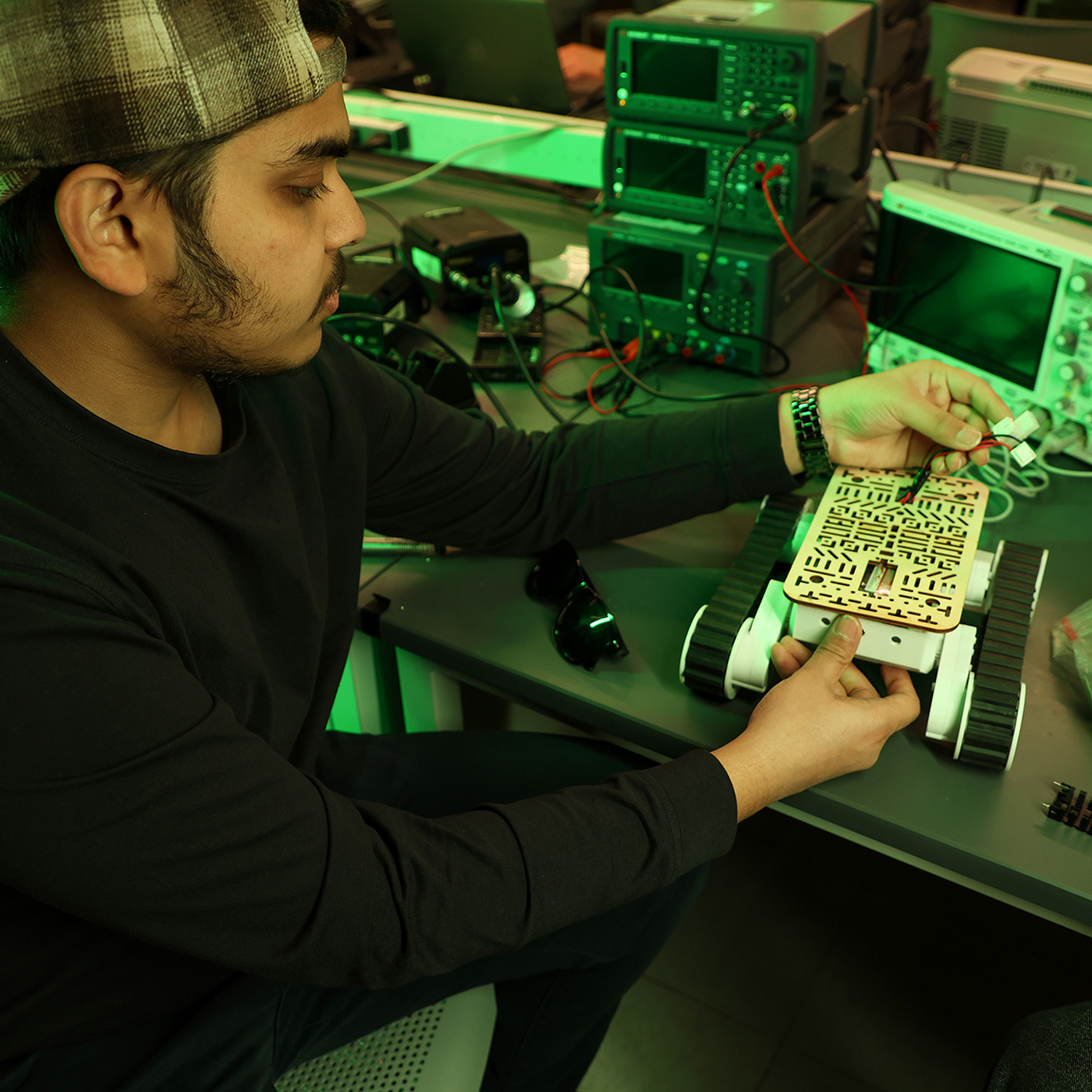
Computer engineering lies at the intersection of hardware and software, powering the computing systems and intelligent devices that drive modern innovation. From microprocessors and embedded systems to computer architecture, automation, robotics, artificial intelligence, and cybersecurity, computer engineers design, develop, integrate, and optimize hardware-software solutions that impact nearly every industry.
At Texas Tech, the Bachelor of Science in Computer Engineering emphasizes hands-on, project-based learning through a structured sequence of design laboratories and real-world applications. Students graduate with a strong foundation in theory, practical experience in modern technologies, and the skills needed to innovate, adapt, and lead in a rapidly evolving engineering landscape.
Engineer With Purpose
Discover how Computer Engineering at Texas Tech combines hands-on learning, accredited coursework, and real-world applications to prepare career-ready graduates.
Degree & Course DetailsAccelerated B.S. to M.S. in Computer Engineering
Texas Tech’s Accelerated B.S. to M.S. in Computer Engineering gives high-achieving students with strong preparation in electrical and computer engineering a faster path to advanced graduate study. Qualified majors begin graduate coursework in their senior year, building advanced skills in areas like computer architecture, embedded systems, hardware–software integration, and cybersecurity while they finish the BS.
Students typically apply to the accelerated Computer Engineering pathway in their junior year. Graduates of the MS in Computer Engineering are prepared for roles such as systems engineer, embedded systems developer, hardware design engineer, or other advanced technical positions in industry, research labs, or further graduate study.
Accelerated B.S. in Computer Engineering to M.S. in Bioengineering
Computer Engineering students may also choose to accelerate into the M.S. in Bioengineering. In this pathway, approved Bioengineering graduate courses taken in the senior year count toward both the B.S. and the M.S., creating a streamlined route into interdisciplinary biomedical engineering that connects engineering, medicine, and the life sciences.
The M.S. in Bioengineering offers thesis and non-thesis options and prepares graduates for research and development roles in biomedical engineering or for further advanced study. Graduates of the MS in Bioengineering are prepared for roles such as biomedical engineer, medical device or diagnostics developer, research engineer in healthcare or biotech, or for continued study in doctoral programs focused on health-related innovation.
Career Paths & Salary Ranges
Our Computer Engineering graduates are making an impact across industries. Explore where our alumni are working and what they're building.
Financial Aid & Scholarships
Incoming students are considered for merit scholarships when they apply for admission. Admitted students can find additional internal and external scholarship opportunities through Scholarship Universe.
All Scholarships College ScholarshipsWhitacre College of Engineering Scholarships
Support for high‑achieving engineering students demonstrating leadership and academic excellence.
Electrical & Computer Engineering Department Awards
Program‑specific opportunities for students in good academic standing.
Student Organizations
-
Association for Computing Machinery
-
Developer Student Club (DSC)
-
Institute of Electrical and Electronics Engineers (IEEE)
-
Institute of Electrical and Electronics Engineers - Women in Engineering (WIE)
Ready to Take the Next Step?
Reach out to our team to learn more about the incredible opportunities at Texas Tech.
Programs
-
Address
Texas Tech University, 2500 Broadway, Lubbock, TX 79409 -
Phone
806.742.2011 -
Email
webmaster@ttu.edu